
AAM BLOG
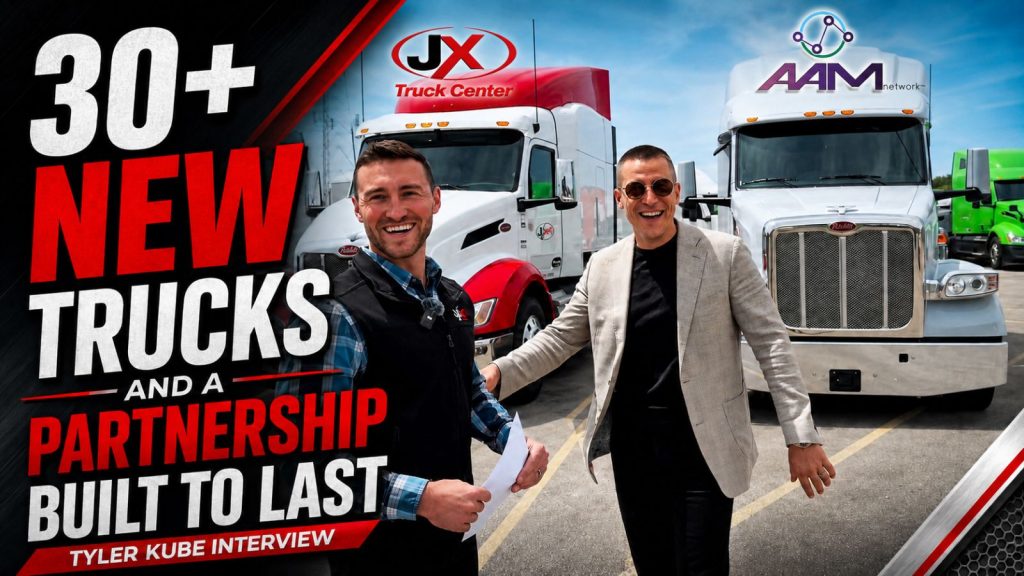
Buying New Peterbilt Trucks: Inside Our Partnership With JX Truck Center
Anyone can buy a truck. Building a fleet is a different discipline entirely.
A purchase order takes an afternoon. A fleet takes years of decisions about specification, timing, financing, service capacity and resale — and almost none of those decisions are made well in isolation. They are made with a partner who knows your operation.
For AAM Network Inc, that partner is JX Truck Center, and for the entire journey it has been one person: Tyler Kube.
Just before the delivery of our newest Peterbilt 579 EPIQ, our team visited JX Truck Center and sat down with Tyler and our CEO, Stojan Milivojevic, for an open conversation about how this partnership was built, why we keep specifying the same truck, and what both sides are seeing in the market right now.
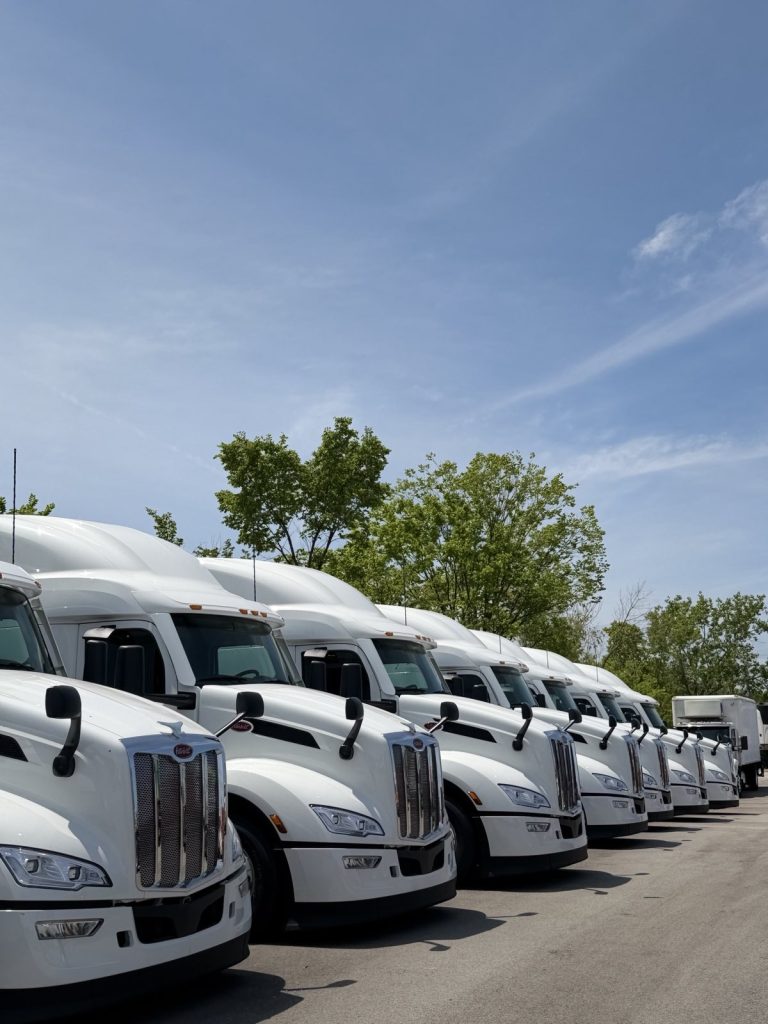
More than 30 units through one dealer
Over the past several years, more than 30 of the new trucks added to the AAM Network Inc fleet have come through JX Truck Center.
That figure did not come from a single large order. It accumulated across multiple purchase cycles, in very different market conditions — some expansionary, some genuinely difficult — with the same representative on the other side of the table every time.
What began as a standard buyer-seller relationship became something more durable: a partnership built on trust, direct communication, mutual respect and a shared enthusiasm for this industry. Tyler learned how we operate, understood where we were trying to go, and helped us make decisions that no spec sheet could have made for us.
He was also the person who made it possible for our CEO to visit the Peterbilt Motors Company factory in Denton, Texas — an experience that permanently changed how we think about the equipment we run.
Why the dealer is part of your equipment strategy
Most carriers evaluating new truck procurement focus almost entirely on unit price and financing terms. In our experience, that is the least important part of the decision.
A Class 8 tractor is a five-to-seven-year commitment. Across that lifespan, the factors that actually determine whether the purchase was sound are:
Specification accuracy. Was the truck configured for the lanes, gross weights and duty cycle it will genuinely run — or for a generic average? A wrong axle ratio or transmission choice costs money every single day for six years.
Uptime and warranty response. How quickly does a fault get diagnosed, approved and repaired? A truck in a service bay is not a depreciating asset — it is an actively bleeding one.
Parts availability. Whether a component is on the shelf or eleven days out is the difference between a scheduled repair and a missed contract.
Resale positioning. Was the unit specified in a way the used market will still want when you cycle it out?
Continuity. Is there one person who remembers your previous six orders and your operational constraints, or a different sales rep every quarter?
Every one of those depends on the dealer relationship, not on the manufacturer’s brochure. This is why AAM Network Inc treats dealer selection with the same seriousness as truck selection — and why we have deliberately kept the same partner as the fleet has grown.
Why we keep specifying the Peterbilt 579 EPIQ
Our latest delivery is another Peterbilt 579 EPIQ. That is not brand sentiment. It is a repeated result.
The EPIQ package is Peterbilt’s fuel-efficiency configuration of the Model 579, pairing an optimized PACCAR MX powertrain with the complete aerodynamic package: full chassis fairings, wheel-well closeouts, ground skirts, sleeper side extenders, and a roof fairing engineered to close the tractor-trailer gap. Layered on top are low rolling resistance tires, tire pressure monitoring, and predictive cruise control that reads terrain ahead and manages speed accordingly.
For a carrier running long-haul dry van freight, fuel is among the largest controllable components of cost per mile. A configuration that improves MPG across an entire fleet is not a comfort feature — it is a margin decision that compounds over millions of miles.
Efficiency is only half the argument, though. The 579 also gives our drivers a cab worth spending a week in: sleeper space, climate control, forward visibility, a quieter ride, and current-generation safety systems. In a market where driver retention is a permanent structural challenge, equipment is a recruiting argument. Drivers talk to each other about what they are given to drive.
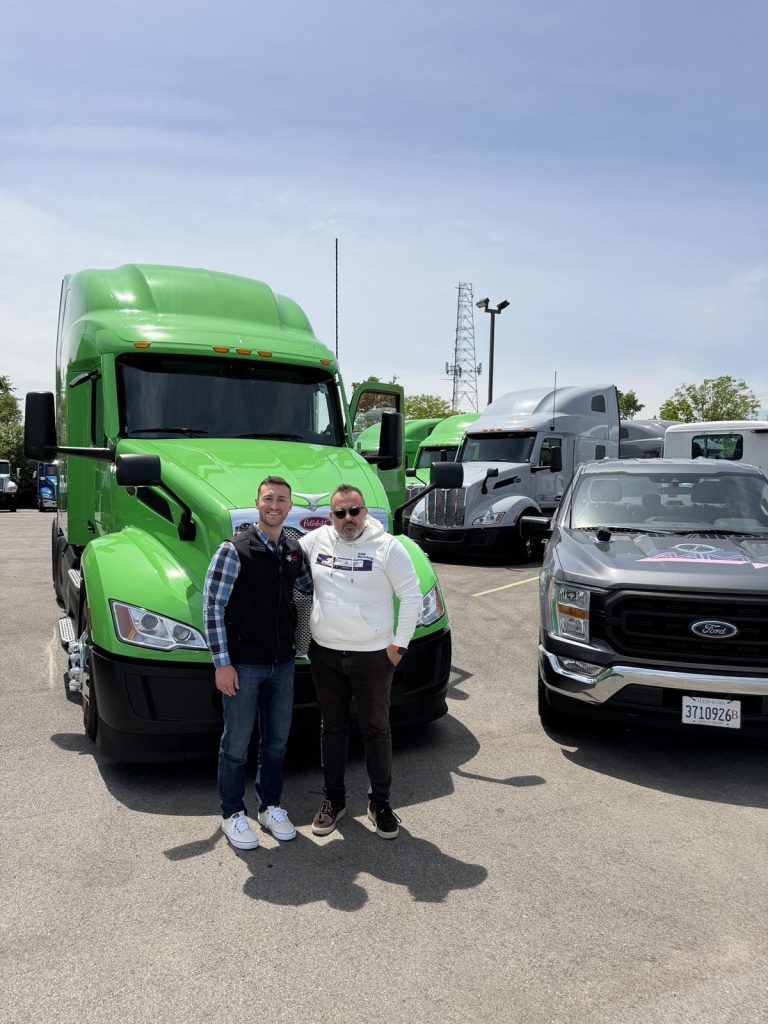
Following industry trends instead of reacting to them
One of the most valuable parts of the conversation with Tyler was his read on where the industry is going. He sees the market from the dealer side — order boards, spec trends, what fleets are committing to and what they are postponing. That is a genuinely different vantage point from ours as a carrier, and it is why we make a point of asking.
Several themes came up that we think matter for any fleet planning capital expenditure right now:
Emissions regulation is shaping order timing. Upcoming engine and emissions requirements influence both the cost and the availability of new equipment. Fleets that plan around regulatory calendars end up buying on their own terms; fleets that ignore them end up buying on someone else’s.
Freight cycles reward the prepared, not the fast. Capacity leaves the market in downturns and returns late. Carriers that maintained a modern, reliable fleet through the soft period are the ones positioned to take on volume the moment rates recover.
Telematics and safety technology are becoming table stakes. Lane departure, adaptive cruise, collision mitigation and integrated fleet data are no longer premium differentiators — they increasingly affect insurance posture, shipper qualification and driver expectations.
Driver expectations have permanently shifted. Newer equipment, better cabs and dependable maintenance are now part of the compensation conversation, not separate from it.
Our position at AAM Network Inc has been consistent throughout: a fleet that only buys equipment when forced to is always buying at the worst possible moment. Modernizing steadily rather than in panic cycles keeps average fleet age low, maintenance costs predictable, drivers satisfied, and the company ready when the market moves.
That approach is only possible with a dealer willing to plan two years ahead with you rather than quarter to quarter.
One request for the 100th unit
Since Tyler mentioned on camera that he personally takes part in truck deliveries, we made a request — and we fully intend to hold him to it.
When unit number 100 arrives, Tyler delivers it himself. The cameras will be ready.
Thank you, Tyler
Thank you for the time, the professionalism and the years of genuine support — and our appreciation to the entire JX Truck Center team for being part of the AAM Network Inc story.
If you are running a fleet or planning your first new-truck purchase, our honest advice is this: invest as much time in choosing your dealer as you invest in choosing your truck. That decision will outlast the equipment.
Together we grow. Every Mile with a Smile.
Frequently Asked Questions
What is the Peterbilt 579 EPIQ?
The 579 EPIQ is Peterbilt’s fuel-efficiency configuration of the Model 579 Class 8 tractor. It combines a PACCAR MX engine and automated transmission with the full aerodynamic package — chassis fairings, ground skirts, sleeper side extenders and roof fairing — plus low rolling resistance tires and tire pressure monitoring, all aimed at reducing fuel cost per mile.
How many trucks has AAM Network Inc purchased through JX Truck Center?
More than 30 new units have been added to the AAM Network Inc fleet through JX Truck Center over the past several years.
Why does the truck dealer matter when buying a new truck?
Purchase price is only the starting point. Specification accuracy, warranty response time, parts availability, service turnaround and resale positioning all depend on the dealer relationship, and together they determine the real cost of the truck across its service life.
Does AAM Network Inc buy new or used trucks?
AAM Network Inc invests in new equipment as part of a continuous fleet modernization strategy, including current model year Peterbilt and Volvo units.