JOIN OUR WINNING TEAM!

+ (312) 800 1993
Instagram Linkedin Facebook
logotype
  • HOMEPAGE
  • HIRING DRIVERS
  • ABOUT
  • ONLINE ACADEMY
  • BLOG
  • CONTACT
APPLY NOW
logotype
  • HOMEPAGE
  • HIRING DRIVERS
  • ABOUT
  • ONLINE ACADEMY
  • BLOG
  • CONTACT
APPLY NOW
  • HOMEPAGE
  • HIRING DRIVERS
  • ABOUT
  • ONLINE ACADEMY
  • BLOG
  • CONTACT
logotype
logotype
  • HOMEPAGE
  • HIRING DRIVERS
  • ABOUT
  • ONLINE ACADEMY
  • BLOG
  • CONTACT
AAM BLOG
HomeArchive by Category "AAM BLOG"

Category: AAM BLOG

AAM BLOG
September 9, 2026 By admin

Buying New Peterbilt 579 EPIQ Trucks | AAM Network Inc
JX Truck Center
JX Truck Center

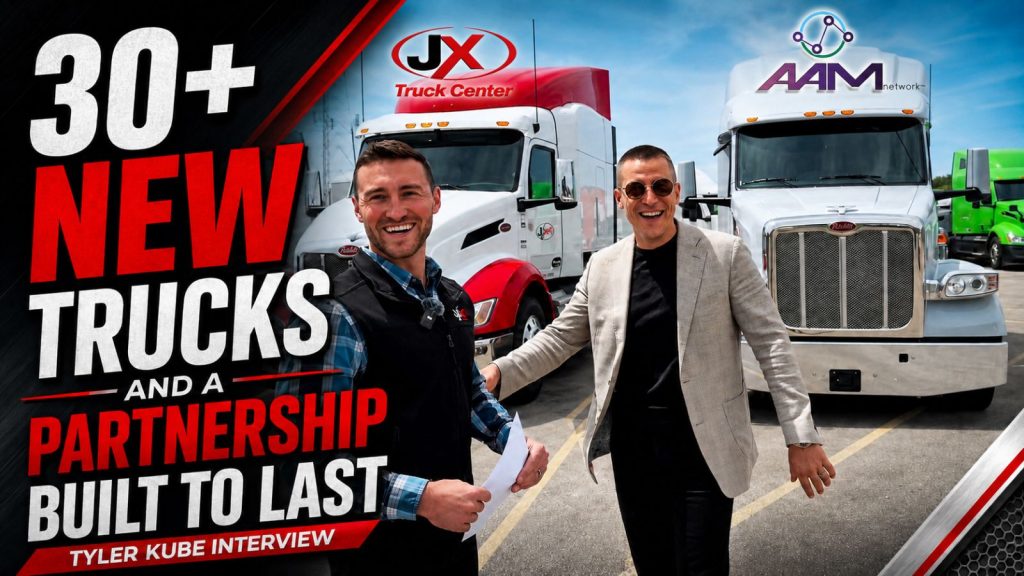
Buying New Peterbilt Trucks: Inside Our Partnership With JX Truck Center

Anyone can buy a truck. Building a fleet is a different discipline entirely.

A purchase order takes an afternoon. A fleet takes years of decisions about specification, timing, financing, service capacity and resale — and almost none of those decisions are made well in isolation. They are made with a partner who knows your operation.

For AAM Network Inc, that partner is JX Truck Center, and for the entire journey it has been one person: Tyler Kube.

Just before the delivery of our newest Peterbilt 579 EPIQ, our team visited JX Truck Center and sat down with Tyler and our CEO, Stojan Milivojevic, for an open conversation about how this partnership was built, why we keep specifying the same truck, and what both sides are seeing in the market right now.

Peterbilt 579

More than 30 units through one dealer

Over the past several years, more than 30 of the new trucks added to the AAM Network Inc fleet have come through JX Truck Center.

That figure did not come from a single large order. It accumulated across multiple purchase cycles, in very different market conditions — some expansionary, some genuinely difficult — with the same representative on the other side of the table every time.

What began as a standard buyer-seller relationship became something more durable: a partnership built on trust, direct communication, mutual respect and a shared enthusiasm for this industry. Tyler learned how we operate, understood where we were trying to go, and helped us make decisions that no spec sheet could have made for us.

He was also the person who made it possible for our CEO to visit the Peterbilt Motors Company factory in Denton, Texas — an experience that permanently changed how we think about the equipment we run.


Why the dealer is part of your equipment strategy

Most carriers evaluating new truck procurement focus almost entirely on unit price and financing terms. In our experience, that is the least important part of the decision.

A Class 8 tractor is a five-to-seven-year commitment. Across that lifespan, the factors that actually determine whether the purchase was sound are:

Specification accuracy. Was the truck configured for the lanes, gross weights and duty cycle it will genuinely run — or for a generic average? A wrong axle ratio or transmission choice costs money every single day for six years.

Uptime and warranty response. How quickly does a fault get diagnosed, approved and repaired? A truck in a service bay is not a depreciating asset — it is an actively bleeding one.

Parts availability. Whether a component is on the shelf or eleven days out is the difference between a scheduled repair and a missed contract.

Resale positioning. Was the unit specified in a way the used market will still want when you cycle it out?

Continuity. Is there one person who remembers your previous six orders and your operational constraints, or a different sales rep every quarter?

Every one of those depends on the dealer relationship, not on the manufacturer’s brochure. This is why AAM Network Inc treats dealer selection with the same seriousness as truck selection — and why we have deliberately kept the same partner as the fleet has grown.


Why we keep specifying the Peterbilt 579 EPIQ

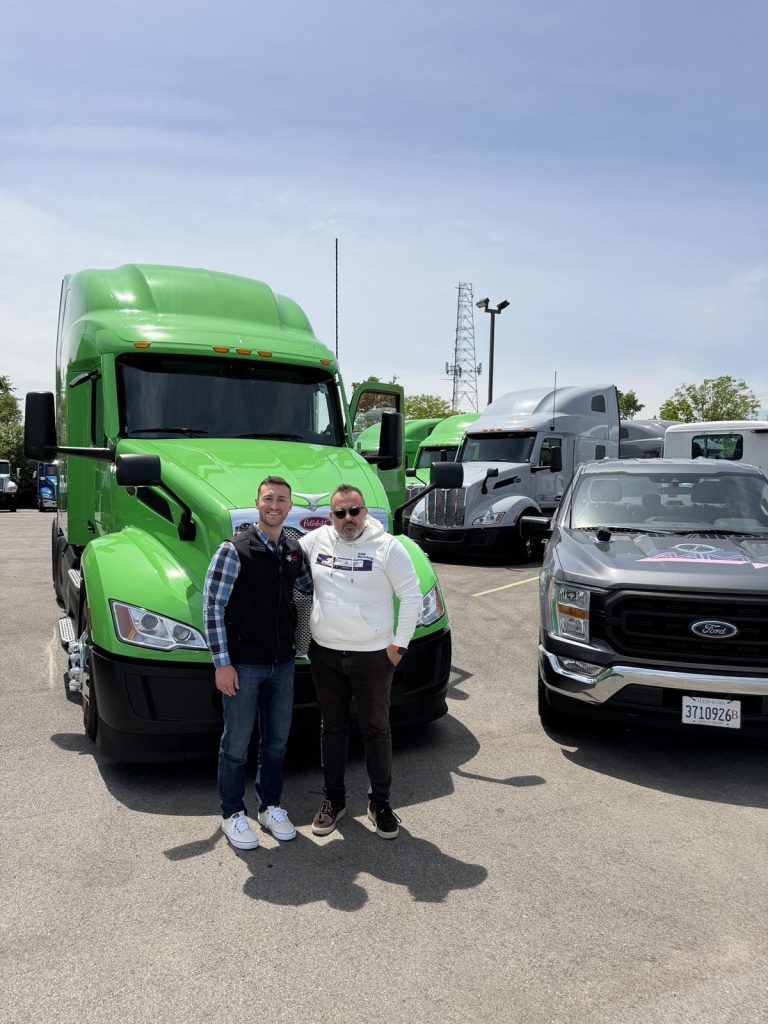
Our latest delivery is another Peterbilt 579 EPIQ. That is not brand sentiment. It is a repeated result.

The EPIQ package is Peterbilt’s fuel-efficiency configuration of the Model 579, pairing an optimized PACCAR MX powertrain with the complete aerodynamic package: full chassis fairings, wheel-well closeouts, ground skirts, sleeper side extenders, and a roof fairing engineered to close the tractor-trailer gap. Layered on top are low rolling resistance tires, tire pressure monitoring, and predictive cruise control that reads terrain ahead and manages speed accordingly.

For a carrier running long-haul dry van freight, fuel is among the largest controllable components of cost per mile. A configuration that improves MPG across an entire fleet is not a comfort feature — it is a margin decision that compounds over millions of miles.

Efficiency is only half the argument, though. The 579 also gives our drivers a cab worth spending a week in: sleeper space, climate control, forward visibility, a quieter ride, and current-generation safety systems. In a market where driver retention is a permanent structural challenge, equipment is a recruiting argument. Drivers talk to each other about what they are given to drive.
Aam Network INC

Following industry trends instead of reacting to them

One of the most valuable parts of the conversation with Tyler was his read on where the industry is going. He sees the market from the dealer side — order boards, spec trends, what fleets are committing to and what they are postponing. That is a genuinely different vantage point from ours as a carrier, and it is why we make a point of asking.

Several themes came up that we think matter for any fleet planning capital expenditure right now:

Emissions regulation is shaping order timing. Upcoming engine and emissions requirements influence both the cost and the availability of new equipment. Fleets that plan around regulatory calendars end up buying on their own terms; fleets that ignore them end up buying on someone else’s.

Freight cycles reward the prepared, not the fast. Capacity leaves the market in downturns and returns late. Carriers that maintained a modern, reliable fleet through the soft period are the ones positioned to take on volume the moment rates recover.

Telematics and safety technology are becoming table stakes. Lane departure, adaptive cruise, collision mitigation and integrated fleet data are no longer premium differentiators — they increasingly affect insurance posture, shipper qualification and driver expectations.

Driver expectations have permanently shifted. Newer equipment, better cabs and dependable maintenance are now part of the compensation conversation, not separate from it.

Our position at AAM Network Inc has been consistent throughout: a fleet that only buys equipment when forced to is always buying at the worst possible moment. Modernizing steadily rather than in panic cycles keeps average fleet age low, maintenance costs predictable, drivers satisfied, and the company ready when the market moves.

That approach is only possible with a dealer willing to plan two years ahead with you rather than quarter to quarter.


One request for the 100th unit

Since Tyler mentioned on camera that he personally takes part in truck deliveries, we made a request — and we fully intend to hold him to it.

When unit number 100 arrives, Tyler delivers it himself. The cameras will be ready.


Thank you, Tyler

Thank you for the time, the professionalism and the years of genuine support — and our appreciation to the entire JX Truck Center team for being part of the AAM Network Inc story.

If you are running a fleet or planning your first new-truck purchase, our honest advice is this: invest as much time in choosing your dealer as you invest in choosing your truck. That decision will outlast the equipment.

Together we grow. Every Mile with a Smile.

Frequently Asked Questions

What is the Peterbilt 579 EPIQ?
The 579 EPIQ is Peterbilt’s fuel-efficiency configuration of the Model 579 Class 8 tractor. It combines a PACCAR MX engine and automated transmission with the full aerodynamic package — chassis fairings, ground skirts, sleeper side extenders and roof fairing — plus low rolling resistance tires and tire pressure monitoring, all aimed at reducing fuel cost per mile.

How many trucks has AAM Network Inc purchased through JX Truck Center?
More than 30 new units have been added to the AAM Network Inc fleet through JX Truck Center over the past several years.

Why does the truck dealer matter when buying a new truck?
Purchase price is only the starting point. Specification accuracy, warranty response time, parts availability, service turnaround and resale positioning all depend on the dealer relationship, and together they determine the real cost of the truck across its service life.

Does AAM Network Inc buy new or used trucks?
AAM Network Inc invests in new equipment as part of a continuous fleet modernization strategy, including current model year Peterbilt and Volvo units.

READ MORE
AAM BLOG
September 4, 2026 By admin

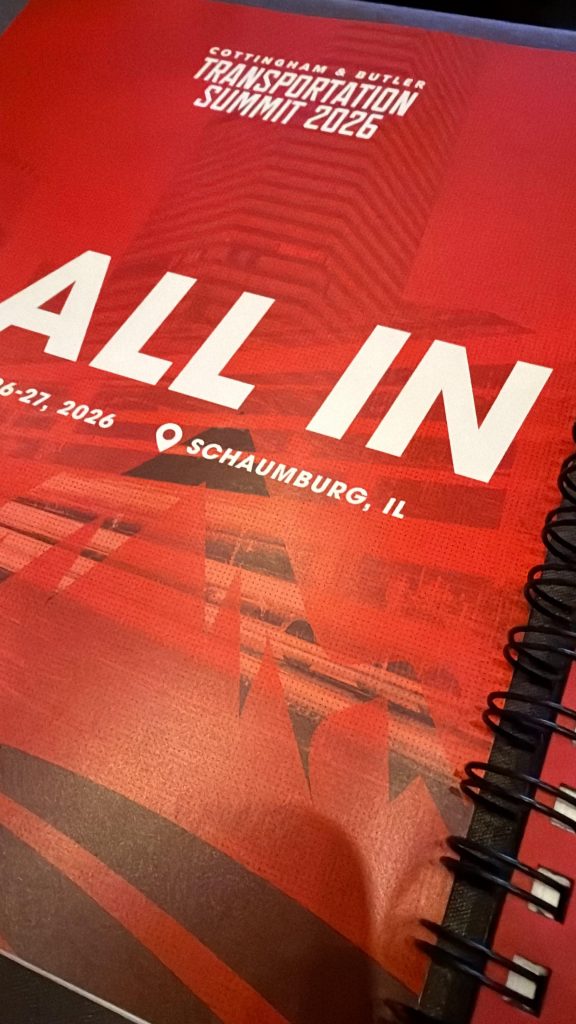
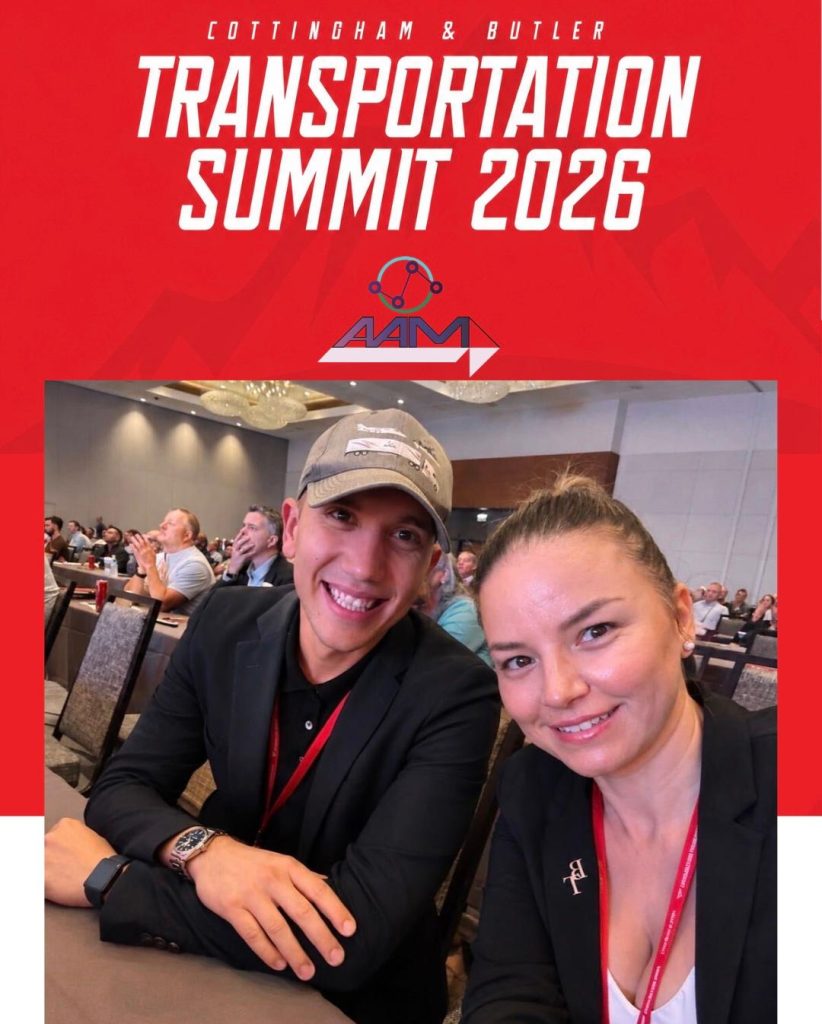
ALL IN: What We Brought Home From the 2026 Cottingham & Butler Transportation Summit

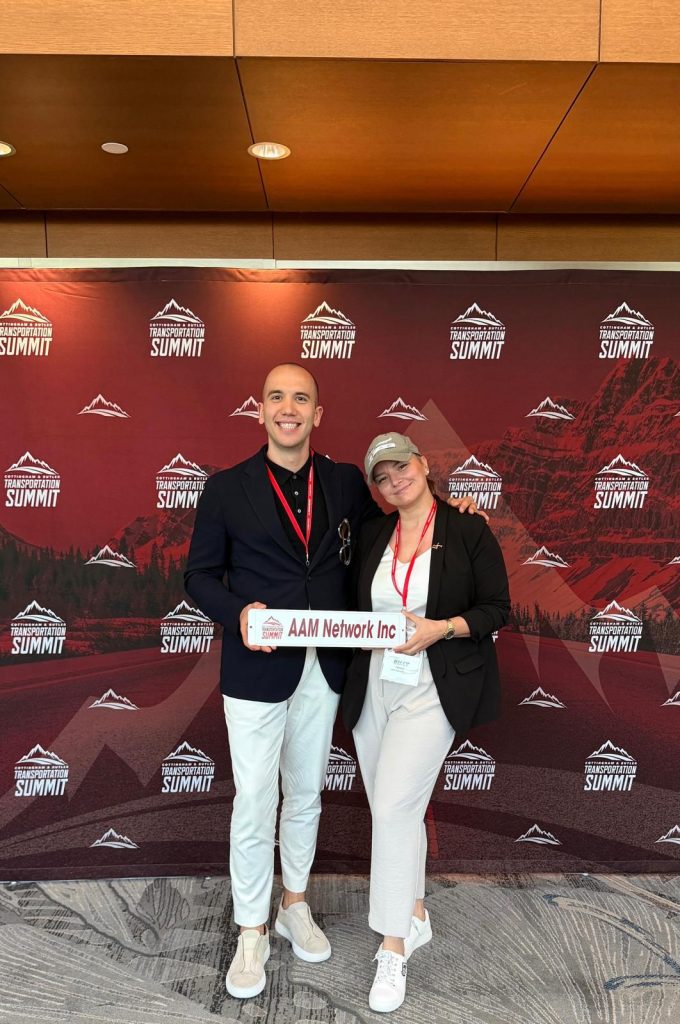
 AAM Network Inc. at the All In Transportation Summit 2026, represented by Biljana Tomic and Miljko Delic.

Two days in Schaumburg, Illinois. Over 550 trucking executives in one room. And a theme — ALL IN — that turned out to be less of a slogan and more of a job description.

The AAM Network team was at the 2026 Cottingham & Butler Transportation Summit from the opening remarks to the closing ones, and we are going home with a notebook that’s going to keep our dispatch, safety, and leadership meetings busy for months.

Here’s what actually mattered, and what we’re taking back to our team and our drivers.


A Straight Read From FMCSA — And a Conversation We Won’t Forget

One of the highlights of the entire Summit for us was the chance to meet and talk directly with Derek Barrs, Administrator of the Federal Motor Carrier Safety Administration.

You don’t often get the head of the agency that writes the rules standing in front of a room full of carriers, taking unfiltered questions. He did exactly that — and the session on stage was blunt about where enforcement is heading.

The direction is not subtle. FMCSA has moved hard on driver qualification: CDL knowledge and skills tests are now administered in English only, with drivers required to be recertified in English, and the agency has been pursuing roughly nine regulatory actions spanning English-language proficiency standards, CDL testing, and new-entrant requirements. Barrs has framed it plainly: a CDL should represent real training, real qualifications, and real competency, and it should be issued in a way that resists fraud — because when loopholes exist, bad actors find them, and good carriers pay the price.

That last part is the piece that hits home for a carrier like us. Every fraudulent operator, every CDL mill, every chameleon carrier makes the market harder and more expensive for the companies doing it right.

And the enforcement isn’t theoretical. FMCSA is working with Homeland Security Investigations on a nationwide audit of the third-party skills testers that states use to grant commercial driver’s licenses, and nearly 30,000 drivers have already been placed out of service on English language proficiency grounds.

What we’re doing about it: re-auditing our own driver qualification files, ELP readiness, and onboarding process — not because we’re worried, but because “we thought we were fine” is not a defense at a compliance review.

Administrator Barrs, thank you for the time and for the straight answers.


Freight Outlook 2026-27: A Capacity Market, Not a Demand Market

Dean Croke of DAT opened the Summit with the freight forecast, and the message lines up with what carriers have been feeling on the road all year: rates are moving on supply, not demand.

The numbers back it up. Contract linehaul rates for dry van and refrigerated freight posted their largest June-to-July increases on record, even as freight volumes declined, and July spot linehaul rates excluding fuel averaged $2.39 per mile for dry van, $2.75 for reefer, and $2.90 for flatbed — with dry van spot and contract rates converging at the same $2.39 figure. As Croke put it, spot rates moving ahead of contract rates has historically signaled a tightening market, but this particular capacity-driven market has no clean precedent.

The structural picture is the same story from a different angle: demand remains uneven, but acute capacity tightness, driver scarcity, regulatory enforcement, and limited fleet expansion are supporting substantially higher truckload rates.

The carrier takeaway: the capacity coming out of this market is partly regulatory. Compliance is no longer just a cost center — it’s the entry ticket to the market that’s left.

chief Derek Barrs
Administrator FMCSA -USDOT chief Derek Barrs

Stolen: Inside the Cargo Theft Surge

If one session made the room go quiet, it was this one. Cargo theft specialist Gary Thomas and the FBI walked through where supply chain crime actually stands in 2026 — and the headline is counterintuitive.

Fewer thefts. Far bigger losses.

CargoNet documented 677 supply chain theft incidents across the U.S. and Canada in Q2 2026 — a 26% decline from Q2 2025 and 14% down from the previous quarter. But total estimated cargo losses more than doubled year over year to $304.6 million, up from $135.7 million, with the average reported loss reaching $564,009. The warning from CargoNet’s Keith Lewis was the line worth writing down: lower incident volume should not be mistaken for lower risk.

For context on the trend line, 2025 closed at roughly $725 million in estimated U.S./Canada cargo theft losses — a 60% jump over the prior year — across 2,646 confirmed incidents.

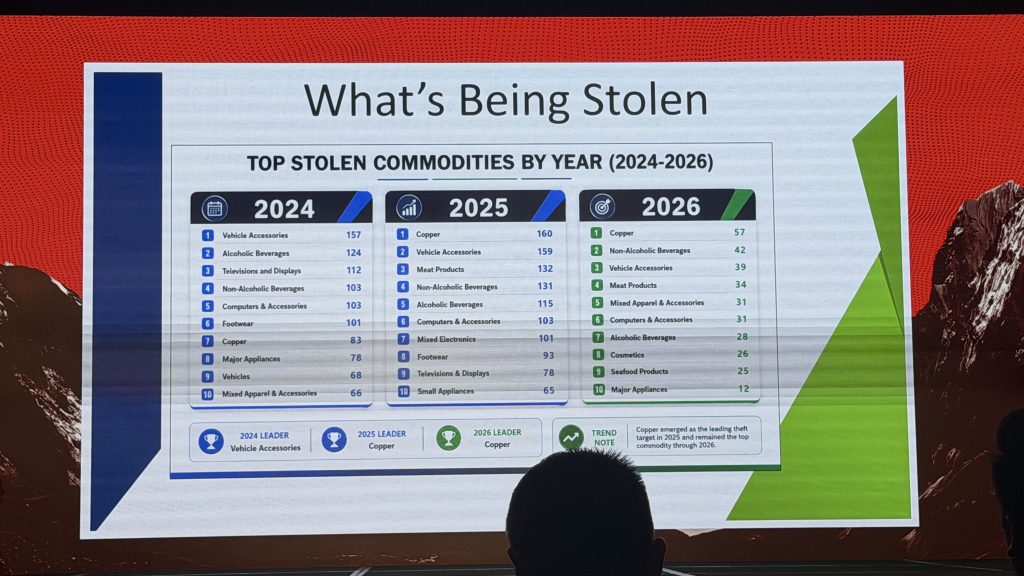
What’s Being Stolen

The commodity mix has shifted sharply toward high-value, easily resold freight:

  • Metals — up. CargoNet recorded 80 metal thefts in Q2 2026, up from 54 a year earlier, with copper the most frequently targeted metal, alongside increases in aluminum, nickel, and tungsten.
  • Enterprise technology. Organized rings continued to target computer and networking equipment and cryptocurrency mining hardware — loads worth millions that often move as ordinary dry freight, creating a serious mismatch between value and security profile.
  • Personal care and beauty. This category posted the sharpest Q1 increase, jumping from 18 events to 50 — a 178% rise driven by cosmetics and fragrances, mostly in the Northeast.
  • Food and beverage — down. Overall food and beverage theft declined.

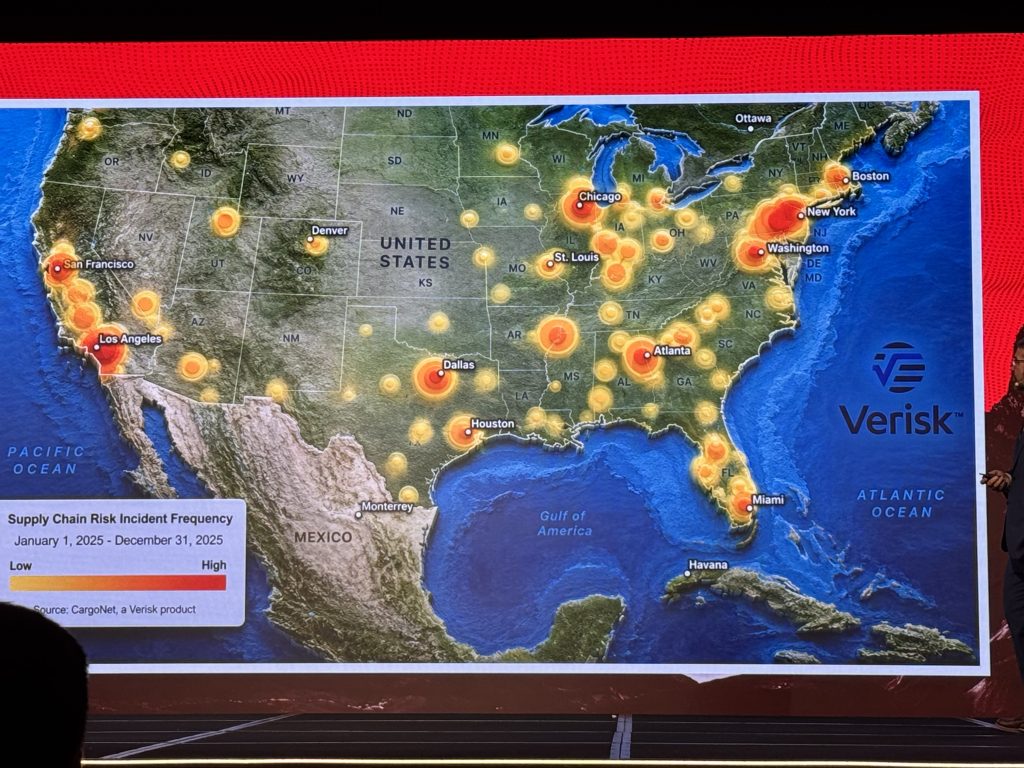
The Cargo Theft Map

Geography matters more than ever, and the map is being redrawn by organized crime rather than opportunists. Among the top eight states, most saw year-over-year declines, with two exceptions: California rose from 255 to 277 incidents and New Jersey surged from 27 to 59 — a 119% jump. Texas dropped 22%, from 102 to 80, as the opportunistic theft historically common in the Dallas–Fort Worth and Houston corridors gave way to more targeted operations elsewhere. The pattern points to reduced activity from domestic criminal organizations in Texas and the Southeast, paired with sustained or growing activity by organized groups operating out of California and the New York City metro area.

How They’re Getting In

This is where it stops being a physical security problem and becomes an IT problem. Business email compromise remained the primary access point for the quarter’s most sophisticated schemes — compromised accounts hand criminals communication history, transportation plans, and the ability to impersonate trusted parties and alter shipment details. CargoNet expects impersonation-based fraud and the exploitation of legitimate carrier identities to remain central to cargo theft, with criminal networks expanding beyond the point of tender to vulnerabilities across the full shipment lifecycle.

Read that again: your MC number and your email inbox are now attack surfaces. Fictitious pickups and identity theft target the carrier’s good name as much as the freight.

What we’re doing about it: tightening pickup verification, locking down email and TMS access, treating high-value loads as a different risk class, and training our drivers on what a fictitious pickup actually looks like in the yard.

chief Derek Barrs
Administrator FMCSA -USDOT chief Derek Barrs

Targeted: Staged Crashes and Nuclear Verdicts

Joseph Baiocco of Wilson Elser covered the other side of carrier exposure — organized fraud rings running staged crashes as a business model, and the jurisdictions where plaintiff verdicts have escalated into eight- and nine-figure events.

The uncomfortable truth for every fleet: the outcome of a claim is often determined long before the accident. It’s determined by your telematics policy, your camera footage retention, your driver files, your post-accident procedure, and your contracts.

What we’re doing about it: reviewing our accident response protocol and our documentation discipline. Evidence you didn’t preserve is evidence the other side gets to characterize for you.


Case in Point: Regulations and Rulings Carriers Can’t Ignore

Greg Feary of Scopelitis closed the regulatory track with the cases carriers need on their radar — AB5 and the broker-carrier model, independent contractor classification across states, chameleon carriers, English proficiency, and where broker transparency regulation is heading.

If your business model touches owner-operators or brokered freight, these are not abstract legal questions. They’re structural questions about how you’ll be allowed to operate in 2027.

Top stolen commodities by year

Leadership: On Fire and All In

Between the data and the regulations, two keynotes reframed everything.

John O’Leary — who survived burns across his entire body at age nine with less than a 1% survival rate — talked about the difference between surviving and thriving. In an industry where a lot of companies have spent three years just surviving, that landed hard.

Rorke Denver, retired Navy SEAL Commander with 13 overseas deployments and a Bronze Star with “V” for valor, closed with the principles that translate from combat leadership to running a trucking company when the pressure is highest.

Different lives. Same lesson: the standard you hold when nobody’s watching is the standard you actually have.


What AAM Network Is Taking Home

Five things going straight into our team meetings:

  1. Compliance is a competitive advantage. Enforcement is removing capacity. Clean carriers inherit the freight.
  2. Cargo security is now cyber security. Verify pickups, harden email, protect your identity as a carrier.
  3. Know your high-risk freight. Metals, electronics, and cosmetics are not ordinary dry van loads anymore.
  4. Document like you’ll be deposed. Because on a bad day, you will be.
  5. Read the market as a capacity story. Plan hiring, capex, and rate strategy accordingly.

Huge thanks to Cottingham & Butler for the organization, the caliber of the speakers, and the quality of the conversations in the hallways — which, as always, were half the value.

To everyone we met in Schaumburg: our door is open. Carrier to carrier.


AAM Network Inc. is a Chicago-area trucking and transportation company. Questions about anything in this recap — or want to talk shop about cargo security, compliance, or the freight market? Reach out. We’re happy to share what we learned.

#Trucking #CargoTheft #FMCSA #FreightMarket #Logistics #TruckingSafety #CBSummit #AAMNetwork

aam network inc
AAM NETWORK INC
READ MORE
AAM BLOG
July 30, 2026 By admin

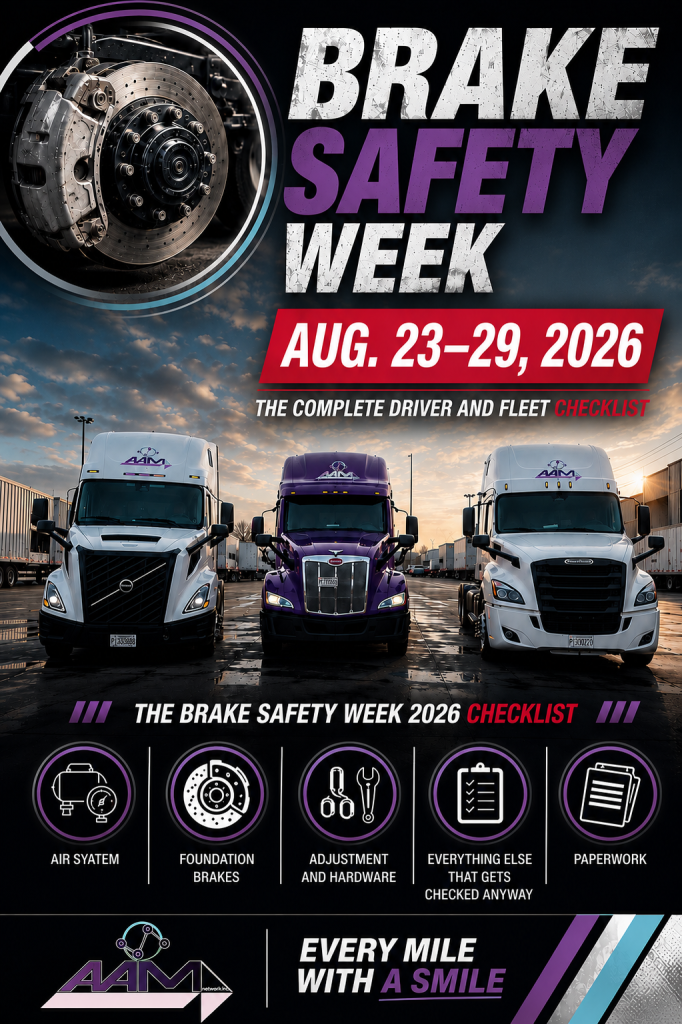
Brake Safety Week 2026 (Aug. 23–29): The Complete Driver and Fleet Checklist

Published by AAM Network Inc. — Every Mile with a Smile

Every August, thousands of trucks get parked on the shoulder for the same reason they’ve been parked on the shoulder for the last thirty years: brakes.

CVSA’s Brake Safety Week 2026 runs August 23–29 across the United States, Canada and Mexico. For one week, certified inspectors will pull commercial vehicles into weigh stations, fixed inspection sites and unannounced roadside checkpoints, and they will look hard at one system. If your drums are cracked or your rotors are worn past spec, you are not finishing that load on time.

At AAM Network Inc., safety isn’t a week on the calendar — it’s how we keep our Freightliners, Kenworths, Peterbilts, Internationals, Volvos and Macks earning instead of sitting. But Brake Safety Week is a useful deadline. Here’s exactly what inspectors are looking for in 2026, what the data says about your odds, and a checklist you can run before the campaign starts.


What Brake Safety Week Actually Is

Brake Safety Week is a seven-day enforcement and education initiative run by the Commercial Vehicle Safety Alliance (CVSA) under its Operation Airbrake program, in partnership with FMCSA, Transport Canada and local enforcement agencies.

A few things drivers should understand about how it works:

  • It’s a Level IV inspection week. Most stops during the campaign are North American Standard Level IV Special Inspections — a targeted examination of one system rather than a full 37-step Level I. Inspectors can document brake condition in detail without running the full driver-and-vehicle review.
  • It covers three countries. Inspectors in the U.S., Canada and Mexico all participate. In 2025, 52 jurisdictions took part.
  • There’s a second, unannounced event. CVSA also runs a Brake Safety Day each year with no advance notice. The 2026 edition was held April 14. Assume the announced week is not your only exposure.
  • The Out-of-Service Criteria change every April 1. The 2026 edition of the North American Standard Out-of-Service Criteria took effect April 1, 2026 and included approved changes affecting brake measurements, wheels and rims, coupling devices and more. Last year’s cheat sheet is not this year’s cheat sheet.

The 2026 Focus Area: Brake Drums and Air Disc Brake Rotors

For the second year running, CVSA has named brake drums and air disc brake rotors as the focus area. Inspectors will record condition data on these components on top of the standard brake inspection.

This matters because drum and rotor defects are not just a CSA-score problem. A broken piece of a drum or rotor can separate at highway speed and become a projectile — CVSA has been explicit that dislodged fragments can damage other vehicles and cause injuries or fatalities. That’s why several drum and rotor conditions are standalone out-of-service violations rather than something that only counts toward the 20% rule.

The specific conditions inspectors are trained to flag:

Brake drums

  • An external crack, or visible cracks that open when the brake is applied
  • A missing segment or piece that could break off
  • Cracks running through to the outer portion of the drum
  • Wear beyond the manufacturer’s maximum diameter

Air disc brake rotors

  • Cracks or broken pieces in the friction surface
  • Severe rust across the entire friction surface on either side (light surface rust is acceptable — a rotor rusted solid usually means the brake is inoperative)
  • Grooving that indicates metal-to-metal contact from pads worn through
  • Wear that has exposed the center vents

The relevant regulatory citations, if you want them for your DVIR notes or a DataQ challenge: 49 CFR 393.47(a) (broken drum, cracked rotor), 393.47(g) (worn rotor), 393.48(a) (metal-to-metal contact, rusted rotor).


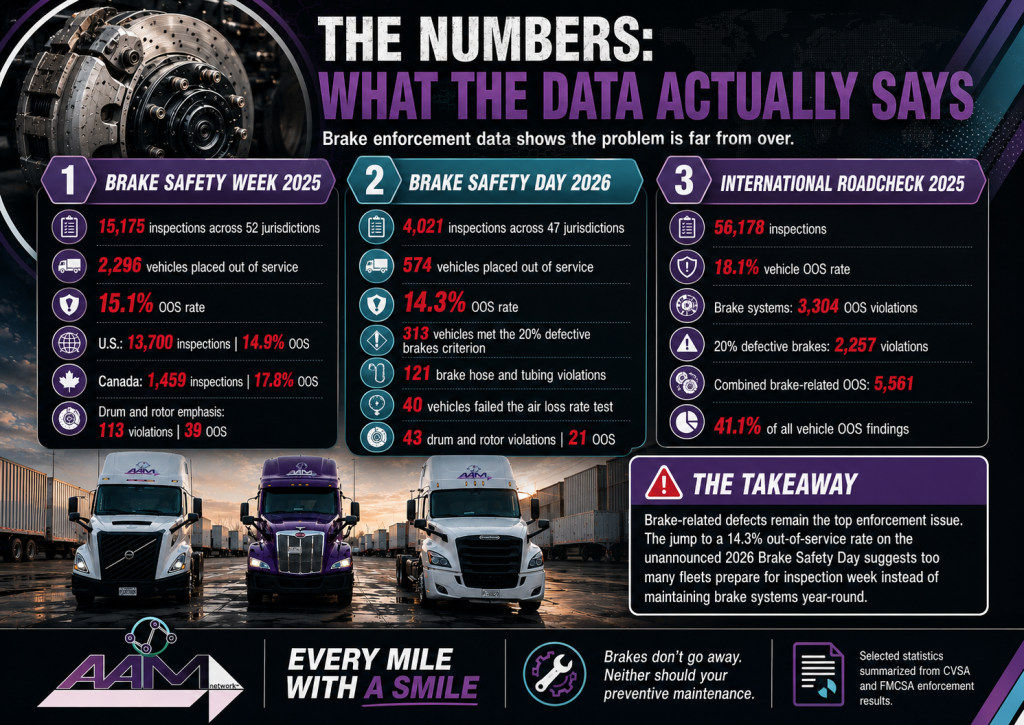
The Numbers: What the Data Actually Says

If you think brake enforcement is overblown, the statistics disagree.

Brake Safety Week 2025 results

  • 15,175 commercial vehicles inspected across 52 jurisdictions
  • 2,296 placed out of service for brake-related violations — a 15.1% OOS rate
  • U.S.: 13,700 inspections, 2,035 OOS (14.9%)
  • Canada: 1,459 inspections, 260 OOS (17.8%)
  • Drum and rotor emphasis produced 113 violations, with 39 vehicles placed out of service

The 15.1% rate was essentially flat against 2024’s 15%, and up from 12.8% in the 2024 campaign year — meaning the industry is not improving on this.

Brake Safety Day 2026 (April 14, unannounced)

  • 4,021 inspections across 47 jurisdictions
  • 574 vehicles placed out of service — a 14.3% OOS rate, up sharply from 8.7% the previous year
  • 313 vehicles met the 20% defective brakes criterion — the single largest violation category of the day
  • 121 OOS violations for brake hoses and tubing
  • 47 steering axle brake violations
  • 40 vehicles failed an air loss rate test
  • 43 drum and rotor violations, 21 of them out-of-service
  • Ten U.S. jurisdictions ran 349 performance-based brake tester (PBBT) inspections; 26 vehicles (7.45%) failed to meet the required 43.5% minimum braking efficiency

That jump from 8.7% to 14.3% on an unannounced day is the number worth sitting with. It suggests fleets prepare for the announced week and let things slide the rest of the year.

International Roadcheck 2025 — the wider picture

  • 56,178 inspections; 13,553 vehicle out-of-service violations; 18.1% vehicle OOS rate
  • Brake systems: 3,304 OOS violations — 24.4% of all vehicle OOS findings, the #1 category
  • 20% defective brakes: 2,257 additional violations (16.7%)
  • Combined: 5,561 brake-related OOS violations — 41.1% of everything

Brake-related defects have topped this list every single year. Focus areas rotate. Brakes don’t go away. FMCSA data also showed six of the top 20 vehicle violations in 2025 were brake-related — defective, worn, or out of adjustment.

For context, roughly 4 million commercial vehicle inspections are conducted across North America every year. Brake Safety Week is a spotlight, not the whole exposure.


Why an OOS Brake Violation Costs More Than a Tow Bill

Drivers tend to think of an out-of-service order as lost hours. Carriers should think about it as a line item that repeats for two years.

1. Immediate downtime. An OOS sticker goes on the windshield. Nobody may operate that vehicle — not even to the truck stop three miles down the road — until the defect is repaired and documented. That means a roadside service call at roadside service prices, a missed appointment, and a driver burning hours in a lot.

2. CSA damage that compounds. FMCSA’s Safety Measurement System assigns each violation a severity weight from 1 to 10, and any violation that results in an out-of-service order gets an additional weight of 2 added on. Brake violations already sit at the top of the Vehicle Maintenance BASIC severity table — brake hose or tubing chafing (393.45) and brakes out of adjustment (393.48(a)) carry a severity of 8, and insufficient braking force (393.52) carries a 10. These stay on your public record for 24 months.

3. Second-order costs. A rising Vehicle Maintenance BASIC means more frequent inspection selection at scales, harder insurance renewals, and brokers who quietly route freight elsewhere. For a small fleet or an owner-operator with few inspections on file, one bad inspection can push you over an intervention threshold.

4. The DVIR trap. One documented case involved a carrier that received a $77,000 fine after a driver correctly noted a brake defect on a DVIR — repeatedly — and the carrier kept dispatching the truck anyway for a month before repairing it. Writing the defect down and then ignoring it is worse than not writing it down. Close the loop.


The Brake Safety Week 2026 Checklist

A. Driver pre-trip and post-trip — every day, not just in August

Air system

  • Build air pressure to governor cutout (roughly 120–135 psi), confirm the compressor cuts out and cuts back in
  • Low-air warning device activates before pressure drops below 60 psi
  • Static air leakage test — listen for audible leaks at chambers, fittings and glad hands
  • Applied air leakage test — hold the brakes applied and watch the gauge
  • Tractor protection valve and emergency brake function correctly
  • Drain air tanks; check for water and oil contamination

Foundation brakes — the 2026 focus

  • Look at every visible portion of each drum for cracks running to the outer edge, missing pieces, or bluing from heat
  • Look at every visible rotor friction surface for cracks, broken pieces, deep grooving, or exposed center vents
  • Check for severe rust across the whole friction surface — light rust is fine, a rusted-solid rotor is not
  • Confirm no metal-to-metal contact between pad/shoe and rotor/drum
  • Lining and pad thickness: an OOS condition exists at 1/16″ or less. Continuous-strip linings must not be under 3/16″; two-segment linings must not be under 1/4″ or worn past the wear indicator

Adjustment and hardware

  • Pushrod stroke within limits for the chamber type — inspectors measure in 1/8″ increments, so borderline is not good enough
  • Automatic slack adjusters functioning (a truck that needs manual adjustment has a defective adjuster, and adjusting it manually masks the real violation)
  • No mismatched brake adjuster lengths across an axle
  • Air hoses and tubing free of chafing, kinking, cracking, bulging or contact with hot or moving parts — this was the #2 OOS category on Brake Safety Day 2026
  • All chamber clamps, springs, pins, bolts, yokes and pushrods present and unbroken
  • Steering axle brakes present and functional where required

Everything else that gets checked anyway

  • ABS malfunction lamp cycles and goes out (tractor and trailer)
  • Parking and emergency brakes hold
  • Trailer electrical connection secure; pigtail not dragging on the catwalk
  • Wheel ends: no oil or grease leaking onto the brake surface, hub oil at level, no signs of smoke or scorching
  • Brake lamps working

Paperwork

  • Current DVIR completed and defects from the last one signed off as repaired
  • Annual inspection report on file and current
  • Registration, insurance, medical card, ELD records ready — inspectors will still check the basics

B. Shop and maintenance manager — before August 23

  • Schedule a preventive brake PM on every unit before the campaign; roadside repair costs several times shop repair
  • Brief technicians specifically on the drum and rotor focus area — this is not a generic brake PM
  • Replace linings/pads with a wear margin, not at the legal minimum. If OOS is 3/16″, replace at 3/16″ plus 3/16″
  • Verify all replacement drums, rotors, linings and pads meet OEM specification — stopping distance compliance depends on it
  • Confirm drums are within maximum diameter and rotors within minimum thickness per manufacturer spec
  • Review the April 1, 2026 OOSC updates and make sure your inspection standard matches the current criteria
  • Print CVSA’s 2026 Brake Safety Week flyer and the brake inspection checklist for the shop wall and every cab
  • Audit open DVIR defects — anything noted and unrepaired is an audit finding waiting to happen
  • If you have access to a PBBT, run your worst-performing units; the standard is 43.5% minimum braking efficiency

C. If you do get placed out of service

  • Do not move the vehicle. Operating on an OOS order is its own violation with severe CSA weight
  • Photograph the defect and keep the inspection report
  • Arrange mobile repair; get a written work order with parts, labor and timestamps
  • Have the repair certified and the OOS cleared before dispatching
  • If the citation is wrong, file a DataQ challenge — FMCSA accepts timestamped maintenance work orders, PM records and technician signatures as evidence. A documented brake inspection days before the citation is strong support

Five Mistakes That Sideline Trucks Every August

  1. Preparing for the week instead of running clean year-round. The 14.3% OOS rate on an unannounced April day tells you exactly how much of the industry does this.
  2. Manually adjusting automatic slack adjusters. It hides the defect for a day and leaves the actual violation in place.
  3. Treating light rust and severe rust the same. Drivers panic over surface rust and miss the rotor that’s rusted across the entire friction surface because the brake isn’t working at all.
  4. Ignoring hoses and tubing. Chafing is cheap to fix and carries a severity weight of 8. It was the second-largest OOS category on Brake Safety Day 2026.
  5. Writing a defect on the DVIR and dispatching anyway. See the $77,000 fine above.

The AAM Network Approach

We’re a family-owned carrier out of the Chicago area, running since 2018, and we’ve grown by keeping equipment in condition rather than gambling on inspection luck. Modern, well-maintained trucks aren’t a marketing line for us — they’re the reason our drivers don’t lose a day in a scale house parking lot in late August.

If you’re a company driver or an owner-operator looking for a fleet that invests in the equipment you’re expected to keep legal, we’d like to talk. Always on the Move.


Frequently Asked Questions

When is Brake Safety Week 2026? August 23–29, 2026, across the United States, Canada and Mexico.

What is the 2026 focus area? Brake drums and air disc brake rotors. Inspectors will collect and report condition data on these components in addition to standard brake violations.

What kind of inspection will I get? Primarily a North American Standard Level IV Special Inspection, targeted at the brake system.

What is the 20% defective brakes rule? A vehicle or combination is placed out of service when 20% or more of its service brakes have a defect that impairs braking. On a standard five-axle tractor-trailer with 10 brakes, two defective brakes puts you out of service. It was the single largest violation category on Brake Safety Day 2026.

Does a violation count against me if I’m not placed out of service? Yes. Every violation recorded on a roadside inspection report feeds into the CSA Safety Measurement System, whether you were placed out of service, cited, or only warned. OOS violations simply carry an extra severity weight of 2.

How long do brake violations stay on my record? 24 months, with recent violations weighted more heavily than older ones.

This article is general safety and compliance information, not legal advice. Always verify current requirements against CVSA and FMCSA publications.

READ MORE
AAM BLOG
June 28, 2026 By admin

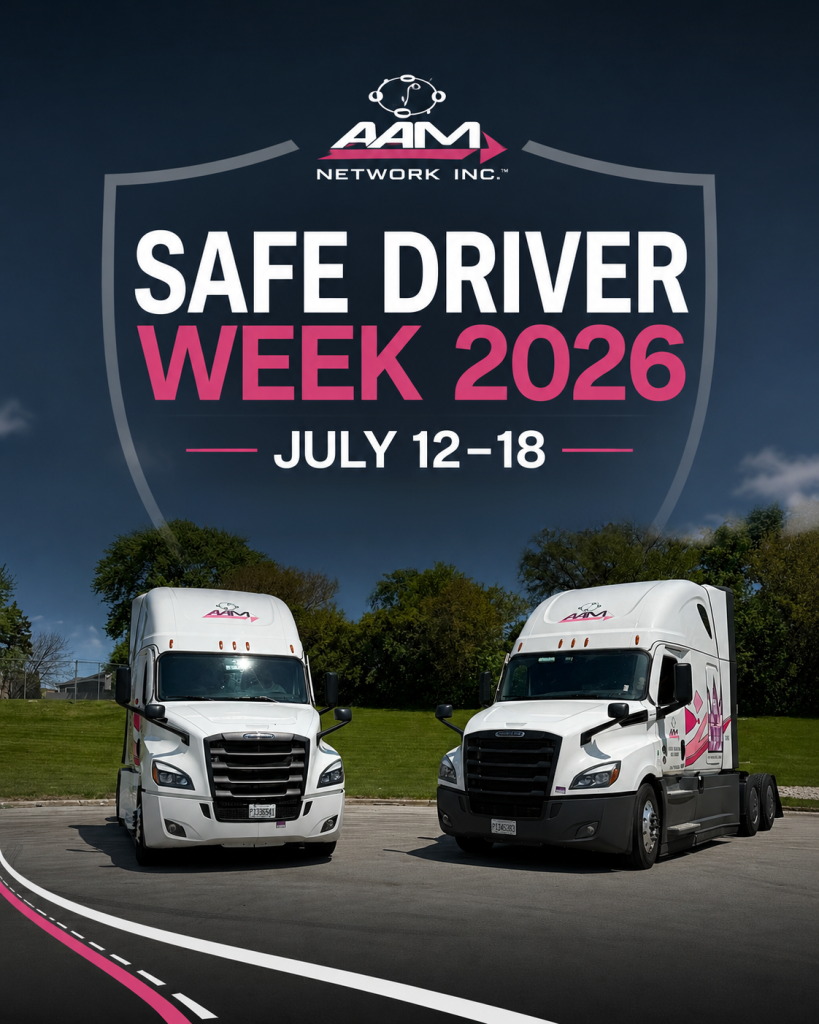
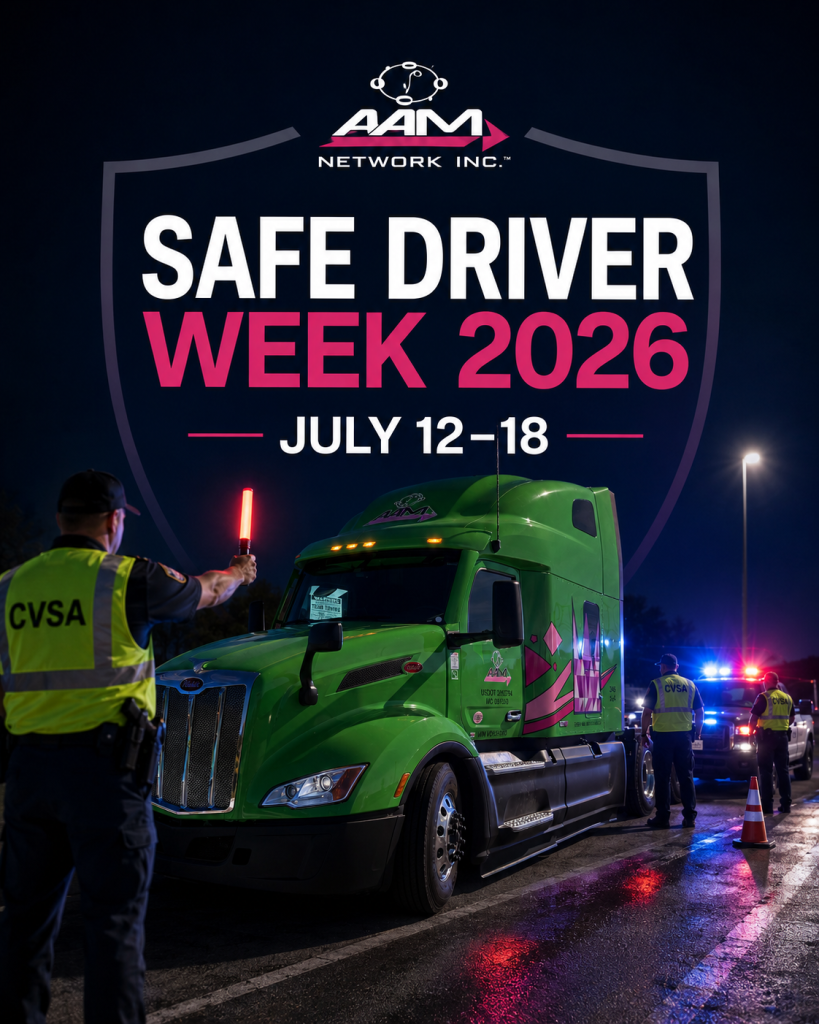
Operation Safe Driver Week 2026: Why Safe Driving Matters More Than Ever

From July 12 to July 18, 2026, law enforcement agencies across the United States, Canada, and Mexico will participate in Commercial Vehicle Safety Alliance Operation Safe Driver Week, one of the most important annual safety initiatives in the trucking industry. The campaign focuses on reducing dangerous driving behaviors through roadside enforcement, education, and direct driver interaction.

At AAM Network Inc, safety has never been just about compliance or avoiding violations.

For us, safety is about people.

It is about making sure every driver gets home safely, every family sleeps peacefully, and every mile is driven with responsibility.

As a carrier operating across 48 states, we understand something many overlook:

The road rewards discipline and punishes complacency.

Operation Safe Driver Week is a powerful reminder of that reality.


What Is Operation Safe Driver Week?

Commercial Vehicle Safety Alliance launched Operation Safe Driver in 2007 to improve driver behavior and reduce preventable crashes involving both commercial motor vehicles and passenger vehicles. Since then, it has become one of North America’s most recognized traffic safety campaigns.

During this week, officers increase patrols and roadside monitoring, watching for high-risk behaviors such as:

  • Speeding
  • Distracted driving
  • Following too closely
  • Unsafe lane changes
  • Aggressive driving
  • Seat belt violations
  • Fatigued driving
  • Impaired driving

Drivers engaging in unsafe behavior may receive warnings, citations, or more serious enforcement actions depending on the violation.

For 2026, the official focus is:

Reckless, Careless, or Dangerous Driving

That includes any behavior showing disregard for the safety of other road users.


The Numbers Behind the Campaign

The statistics behind Safe Driver Week are sobering.

In the United States:

  • Speeding contributed to 29% of all traffic fatalities in 2024
  • 11,288 people died in speed-related crashes
  • Distracted driving caused 3,208 deaths
  • Nearly half of vehicle occupants killed were not wearing seat belts

Even more concerning, driver behavior contributes to approximately 94% of all crashes. That means most accidents are not caused by equipment failure or weather alone — they begin with human decisions.

One bad decision can change everything.

A few extra mph.
A quick glance at a phone.
Following too closely in heavy traffic.
Driving tired to “save time.”

That is often how incidents begin.


Why This Matters in Trucking

Commercial drivers carry more than freight.

They carry responsibility.

An 80,000 lb truck requires greater stopping distance, more awareness, and constant anticipation of what other drivers might do.

Professional truck drivers face challenges every day:

  • Passenger vehicles cutting them off
  • Blind spot intrusions
  • Aggressive merging
  • Sudden braking in traffic
  • Weather and construction zones
  • Fatigue from long-haul operations

The reality is that many crashes involving trucks are not caused by truck drivers alone.

Yet professional drivers are expected to remain calm, alert, and defensive at all times.

That is what separates a professional from just someone holding a CDL.

At AAM Network Inc, we deeply respect the people behind the wheel.

Because trucking is not easy.

It demands patience, focus, and mental endurance.


Safety Is Bigger Than Avoiding Tickets

Many people think Safe Driver Week is just about avoiding citations.

It is much bigger than that.

Unsafe driving affects:

  • CSA scores
  • DOT inspection history
  • Insurance premiums
  • Broker trust
  • Customer confidence
  • Carrier reputation

A pattern of violations can quietly damage a carrier’s business.

Clean inspections and safe habits, on the other hand, build credibility.

In today’s market, brokers and shippers increasingly evaluate safety history before awarding freight.

Safety is no longer just operational.

It is competitive advantage.


The Biggest Risks on the Road in 2026

Based on enforcement data, several violations consistently remain at the top.

Speeding

Still the number one issue during Safe Driver Week.

Speed reduces reaction time and dramatically increases stopping distance, especially for heavy commercial vehicles.

Distracted Driving

Phones remain one of the biggest threats on American roads.

Even two seconds of distraction at highway speed can mean traveling hundreds of feet effectively blind.

Fatigue

Fatigue is often underestimated because it builds gradually.

Tired driving can impair reaction time similarly to alcohol.

Aggressive Driving

Tailgating, unsafe lane changes, weaving through traffic, and road rage continue to be major crash factors.


What Safe Drivers Do Differently

Safe drivers are rarely the fastest drivers.

They are usually the most consistent.

Professional drivers build habits that reduce risk every day:

  • They respect speed limits
  • They keep safe following distance
  • They scan traffic ahead
  • They anticipate mistakes from others
  • They avoid unnecessary distractions
  • They communicate delays early
  • They rest when tired

Great driving is often invisible.

No hard brakes.
No panic moves.
No unnecessary risk.

Just discipline.

Mile after mile.


Our Message to Drivers

To all drivers — not just AAM drivers — this week is a reminder.

Slow down when needed.
Leave more space.
Stay patient.
Stay focused.

No load is worth a life.

No appointment is worth a crash.

No deadline matters more than getting home safely.

The best drivers understand something simple:

Arriving safely is always on time.


Final Thoughts

Operation Safe Driver Week lasts seven days.

But safe driving is a 365-day commitment.

At AAM Network Inc, we believe professionalism starts with safety and ends with trust.

We are proud of every driver who chooses discipline over shortcuts and responsibility over risk.

This July, and every week after:

Drive smart.
Drive safe.
Protect each other.

Every Mile with a Smile.

READ MORE
AAM BLOG
May 18, 2026 By admin

4 DOT Inspections. 4 Clean. What Blitz Week Means for Safety at AAM NETWORK INC

Every year, the transportation industry across North America enters one of the most demanding periods for carriers, drivers, dispatchers, fleet managers, and safety departments. The Commercial Vehicle Safety Alliance International Roadcheck, better known in the trucking world as Blitz Week, is not just another inspection period. For many companies, it becomes a true test of organization, preparation, communication, and internal systems.

This year, during one of the most intensive inspection weeks on the road, our team at AAM NETWORK INC achieved something we are genuinely proud of:

4 DOT Inspections. 4 Clean Inspections.

No violations. No unnecessary downtime. No out of service situations.

For us, this result is not about luck. It is about preparation.

Because in trucking, especially during Blitz Week, details matter.


What Is Blitz Week and Why Does It Matter?

Every year, officers across the United States, Canada, and Mexico conduct thousands of roadside inspections during the annual International Roadcheck organized by CVSA.

During these inspections, enforcement officers perform detailed Level I inspections, checking both the driver and equipment. These inspections often include:

  • Hours of Service and ELD compliance
  • Brake systems
  • Tire condition and tread depth
  • Cargo securement
  • Lights and electrical systems
  • Medical certificates and CDL verification
  • Driver documentation
  • Air leaks, steering and suspension components

For trucking companies, Blitz Week represents much more than inspections. It reflects the health of the company’s entire operational system.

A poor inspection can impact CSA scores, create downtime, increase operational costs, affect insurance, and damage relationships with brokers and shippers.

That is exactly why we treat safety as an everyday priority, not a seasonal reaction.


Safety Does Not Start at the Scale House

One of the biggest misconceptions in trucking is that safety begins when a truck pulls into an inspection station.

In reality, safety starts long before that.

It starts with proper orientation.

It starts with communication between departments.

It starts with preventive maintenance.

It starts with clear expectations and strong operational standards.

At AAM NETWORK INC, we are constantly developing and improving internal systems, procedures, and guidelines designed to help us avoid accidents, violations, and unnecessary risks.

Because one truth remains simple:

Good safety scores are built every single day.

They are built through preparation, consistency, and accountability.


Behind Every Clean Inspection Is a Strong Team

While drivers deserve enormous credit for professionalism on the road, successful inspections are never the result of one person alone.

They reflect the effort of an entire support team working behind the scenes.

This Blitz Week, we want to recognize the people who invested long hours making sure details were covered, communication stayed clear, and every truck and driver received proper support.

A special thank you to:

Billy, Mia, Tea, Sandra, Lucky, and Sam.

From fleet operations to safety management, compliance checks, driver communication, and operational support, this week required focus and teamwork from everyone involved.

Their work often happens quietly in the background, but results like this speak loudly.

Because when a driver gets inspected roadside, they are never standing there alone.

An entire team stands behind that truck.


Building a Better Safety Score Is a Daily Process

In today’s trucking environment, safety scores matter more than ever.

Brokers review them.

Shippers monitor them.

Insurance providers analyze them.

And most importantly, they directly influence operational performance.

At AAM NETWORK INC, improving our safety profile is an ongoing process.

We continuously work on:

Stronger internal safety procedures

Clear communication and preventive systems designed to reduce avoidable mistakes.

Better maintenance coordination

Because many roadside violations begin with something preventable.

Driver education and awareness

Helping drivers stay informed, prepared, and compliant.

Faster problem solving

Addressing issues before they become expensive setbacks.

Long term operational discipline

Because sustainable growth only happens when systems are strong.

We believe that operational excellence in trucking is not about reacting to problems.

It is about preventing them.


Safety Is Respect

At the end of the day, safety is about more than inspections.

It is about protecting drivers.

Protecting equipment.

Protecting customers.

Protecting the reputation we build mile after mile.

Every clean inspection means fewer delays, fewer problems, better relationships, and stronger trust with the people we work with every day.

Most importantly, it means our drivers can continue doing what they do best safely and professionally.


4 Inspections. 4 Clean. But We Keep Moving Forward.

We are proud of the result.

But we are even prouder of the mindset behind it.

Because in trucking, there is always room to improve.

New systems.

Better communication.

Stronger procedures.

Safer roads.

Blitz Week may last only a few days, but for us, safety is a commitment that continues every single day of the year.

4 inspections. 4 clean. Back to work.

READ MORE
AAM BLOG
April 3, 2026 By admin

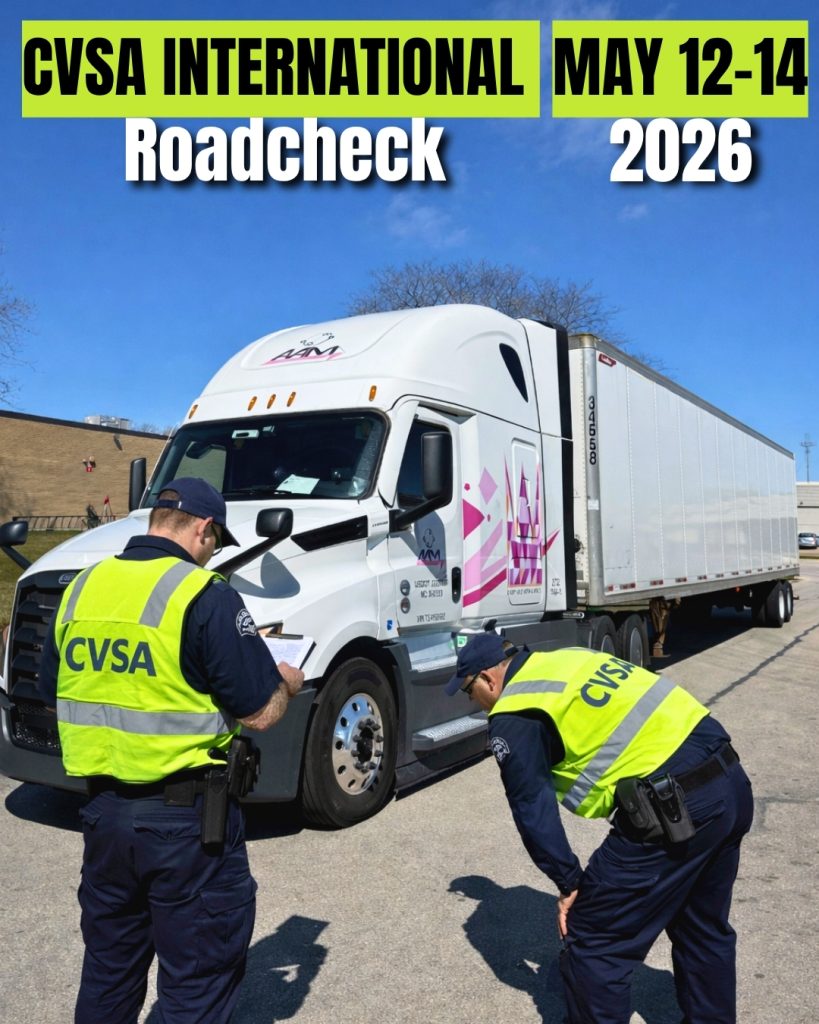
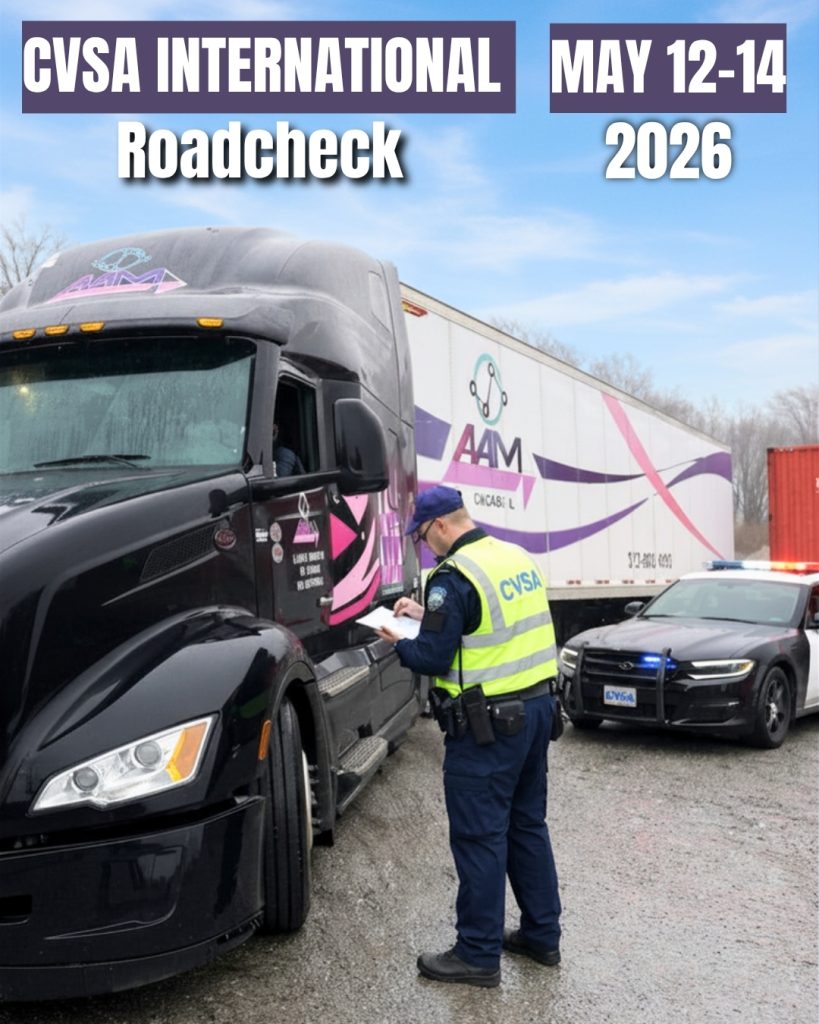
CVSA International Roadcheck 2026 Is Coming: What Drivers and Carriers Need to Know

CVSA’s International Roadcheck

From May 12 to 14, 2026, the entire North American trucking industry will be under the spotlight as the Commercial Vehicle Safety Alliance runs its annual International Roadcheck. For three days, inspectors across the U.S., Canada, and Mexico will be working at full capacity, checking trucks and drivers at weigh stations, roadside locations, and pop-up inspection points.

This is not just another routine inspection period. This is the biggest enforcement event in our industry, where thousands of trucks are inspected every hour, and where even small mistakes can lead to serious consequences.

At AAM NETWORK INC, we treat this period with full respect, but also with confidence. Because preparation is something we do every day, not just when Roadcheck is coming.


What Inspectors Actually Do on the Road

During Roadcheck, the most common inspection is the Level I inspection, a detailed 37-step process that covers both the driver and the truck.

On the driver side, inspectors will check:

  • CDL and qualifications
  • Medical card
  • Record of Duty Status (ELD logs)
  • Seat belt usage
  • Drug and Alcohol Clearinghouse status
  • Signs of fatigue, alcohol, or drug impairment

On the vehicle side, they go deep into:

  • Brake systems
  • Tires, wheels, and rims
  • Suspension and steering
  • Lights and electrical systems
  • Frame and structural components
  • Cargo securement
  • Coupling devices and driveline

If anything critical is found, the result is immediate.
Driver out of service. Truck out of service. Load stopped.


2026 Focus: This Is Where You Will Be Tested

Every year, CVSA puts extra attention on two key areas.
This year, they are going straight to the core problems in the industry.

1. ELD Tampering and Log Manipulation

This is the number one focus on the driver side.

Inspectors are no longer just looking at your screen and trusting what they see. Those days are gone.

Now they are:

  • Comparing logs with fuel receipts
  • Checking toll data and trip history
  • Reviewing bills of lading
  • Looking at license plate tracking systems
  • Going back 7 days plus current day (8 days total)

If something does not match, they dig deeper.

The reason is simple.
Last year, falsified logs were one of the most common violations with over 58,000 cases.

And here is the reality:
Some drivers are not making mistakes. They are intentionally hiding drive time.

Because of that, inspectors are much stricter now.
There is no more “benefit of the doubt.”

If they find:

  • Edited logs without proper trace
  • Missing drive time
  • Suspicious activity in ELD

You are placed out of service for 10 hours immediately.


2. Cargo Securement

This is the main vehicle focus for 2026, and it applies to everyone, not just flatbeds.

Inspectors will check:

  • Is the load stable
  • Can anything move, shift, fall, or leak
  • Are straps, chains, and binders in good condition
  • Are spare items secured (tires, load bars, tarps, tools)
  • Is everything inside the trailer controlled

Numbers from last year:

  • 18,108 violations for unsecured cargo
  • 16,054 for unsecured equipment and materials

And here is something drivers often overlook:

Even inside a dry van, cargo movement is a violation.

Also important:
The system is only as strong as its weakest point.
If one strap or chain is weak, the whole load is considered unsafe.


What Changed: Inspectors Are Going “Old School”

One of the biggest changes this year is how inspections are done.

Because of ELD manipulation, inspectors are going back to basics.

They are treating ELD logs like paper logs again.
They verify everything manually.

This means:

  • More time spent on each inspection
  • More detailed questioning
  • More cross-checking data

Even small inconsistencies can trigger a full inspection.


Real Situation on the Road

During these 72 hours:

  • States increase manpower
  • Inspection stations run 24/7
  • Officers from different departments are brought in
  • Mobile patrols are active everywhere

You will see more inspections than usual.
And you will feel the pressure on the road.


How to Prepare Properly

Drivers

  • Keep your ELD clean and accurate every day
  • Review your last 7 days before May 12
  • Understand personal conveyance rules
  • Do a serious pre-trip inspection, not just routine
  • Check your load multiple times during the trip
  • Carry extra straps, chains, or securement equipment

Carriers

  • Audit driver logs before Roadcheck
  • Verify all ELD devices are compliant
  • Train drivers again on cargo securement
  • Make sure every truck is inspection-ready
  • Fix small issues before they become big problems

AAM NETWORK INC Standard

At AAM NETWORK INC, this is where our fleet department shows its real value.

Our team works every day to make sure:

  • Trucks are fully maintained
  • Equipment is clean and compliant
  • Drivers have support and clear instructions
  • Every unit is ready for DOT inspection at any moment

We don’t wait for Roadcheck to fix problems.
We prevent them before they happen.

That is why our goal is simple:
No bad inspections. No surprises. No downtime.

International Roadcheck lasts three days.
But what it represents lasts the whole year.

This is about discipline.
This is about professionalism.
This is about safety for everyone on the road.

To all drivers and partners:

Take this seriously.
Check everything.
Fix everything.
Do not leave anything to chance.

Because when the inspector steps up to your truck,
you only get one shot.

Stay ready. 🚛

READ MORE
AAM BLOG
January 16, 2026 By admin

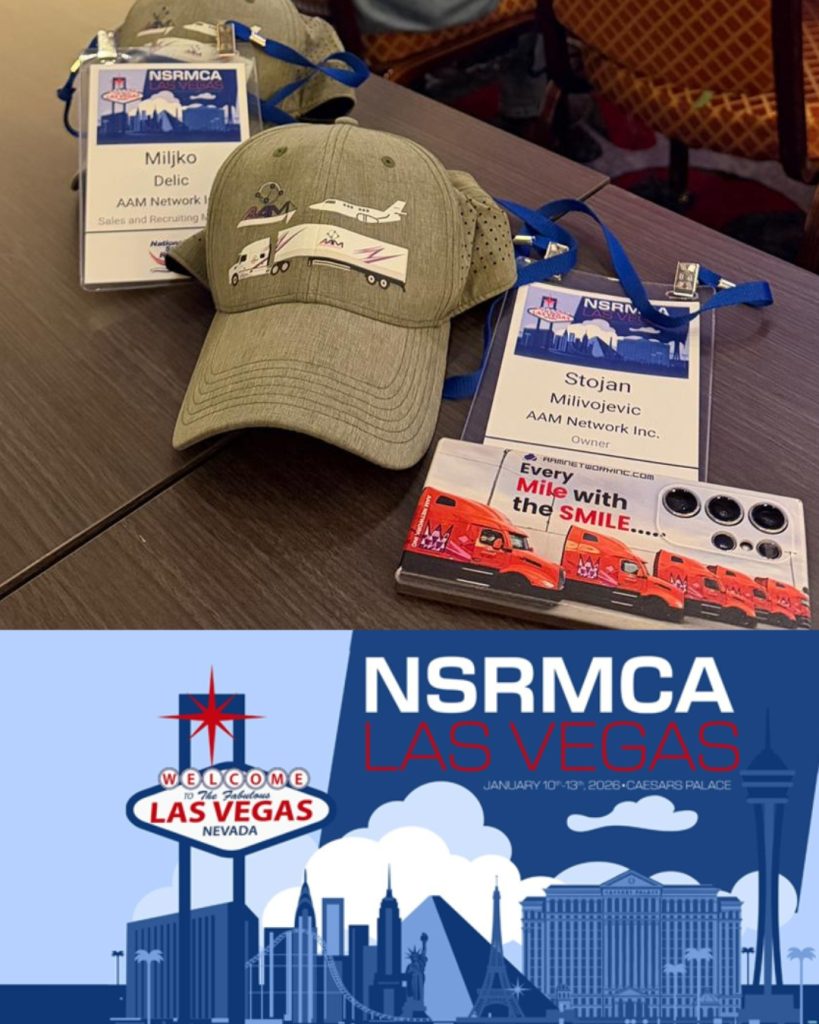
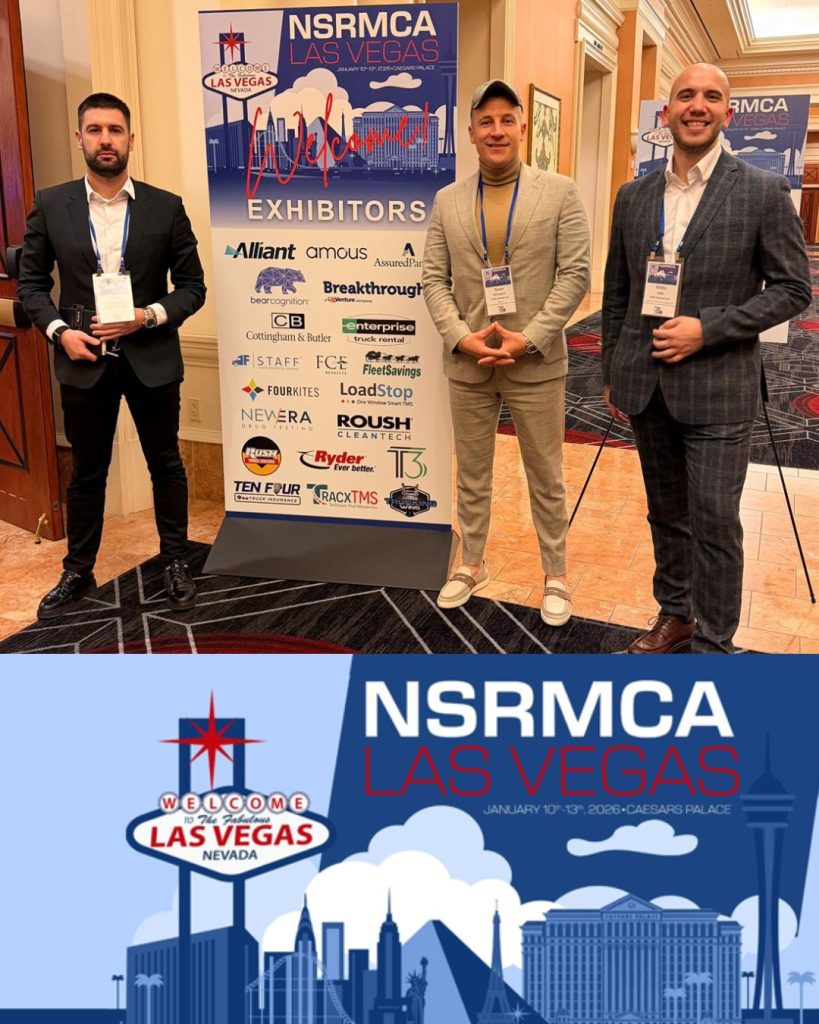
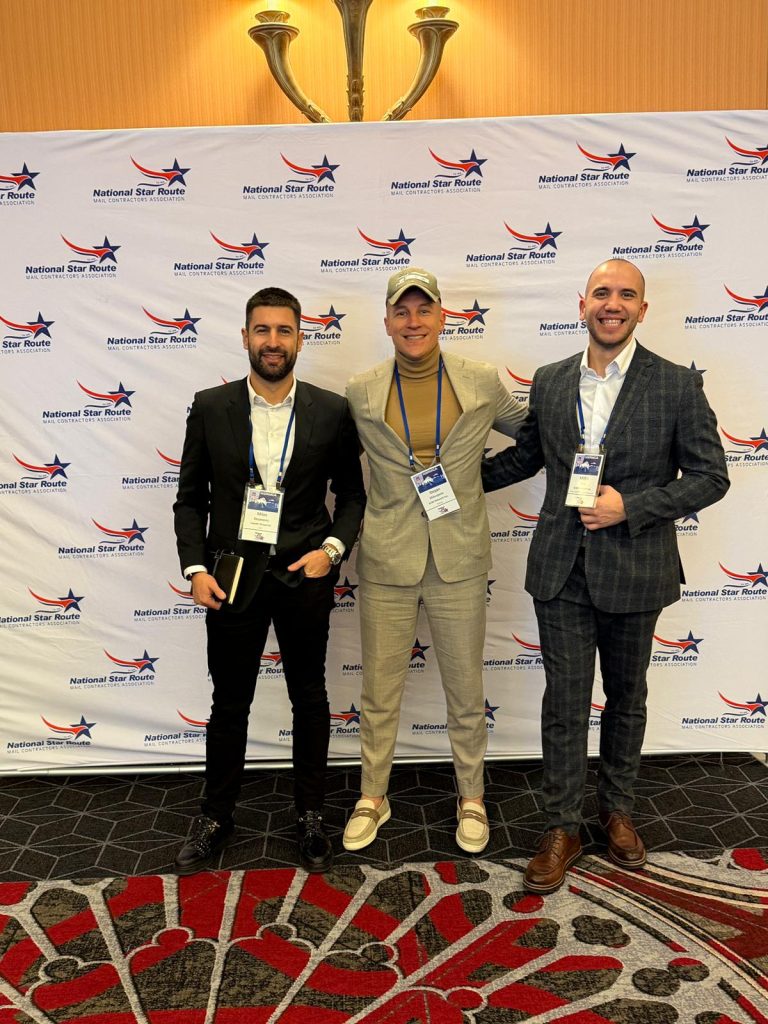
NSRMCA Conference Las Vegas: Strengthening Dedicated USPS Mail Partnerships

Where We Are and Why We’re Here

Las Vegas has always been a place where serious business meets big vision. This year, it became the meeting point for leaders shaping the future of dedicated USPS mail transportation at the NSRMCA Conference. As a carrier with years of hands-on experience in USPS mail hauling, dedicated routes, and time-critical freight, AAM Network Inc. proudly took part in this important industry event.

Our participation was not symbolic. It was intentional.

Representing AAM Network Inc. were our CEO & Founder, Stojan Milivojevic, and COO, Miljko Delic, attending on behalf of our entire operational and driver team. Their presence reflected what defines our company: direct involvement of leadership, long-term commitment to partnerships, and a clear focus on operational excellence in dedicated mail transportation.


About the NSRMCA Conference

The National Star Route Mail Contractors Association (NSRMCA) Conference is one of the most relevant gatherings for carriers, contractors, and partners involved in USPS mail transportation across the United States. It brings together experienced operators, decision-makers, and industry stakeholders to discuss:

  • The future of USPS dedicated routes
  • Regulatory updates and compliance standards
  • Operational best practices for mail hauling
  • Safety, reliability, and service continuity
  • Long-term collaboration between USPS contractors, brokers, and carriers

For companies like ours, operating daily within strict USPS standards, this conference is not just an event, it is a strategic checkpoint.


Our Role as a Dedicated USPS Mail Carrier

At AAM Network Inc., dedicated mail transportation is not a side operation. It is a core part of our business.

We operate as a professional trucking carrier with:

  • Company-owned and well-maintained trucks
  • Experienced CDL drivers familiar with USPS requirements
  • Proven performance on dedicated mail lanes
  • Strong dispatch, safety, and compliance teams
  • 24/7 operational support

Over the years, we have successfully handled USPS mail freight with a clear understanding of what matters most: on-time delivery, consistency, security, and trust.

The NSRMCA Conference provided the ideal environment to exchange real operational insights, discuss challenges faced by mail contractors, and align on solutions that protect service quality and long-term sustainability.


Leadership Presence Matters

One of the strongest messages we brought to Las Vegas was simple: leadership involvement matters.

With our CEO and COO present, conversations went beyond theory. Discussions focused on:

  • Real-world execution of dedicated mail routes
  • Fleet planning and capacity reliability
  • Risk management and contingency planning
  • Building scalable carrier–broker relationships

This approach reflects how we operate daily. We believe that strong leadership creates stable operations, and stable operations are exactly what USPS mail contractors and brokers need from a carrier partner.


Building Stronger Partnerships

Our engagement at the NSRMCA Conference reaffirmed something we already believe:

Dedicated USPS mail transportation works best when carriers and partners think long-term.

We are always open to building new relationships with:

  • USPS mail brokers
  • Prime contractors
  • Logistics partners managing dedicated lanes
  • Industry professionals seeking reliable carrier capacity

AAM Network Inc. offers dependable trucking solutions backed by experience, structure, and accountability. We don’t chase short-term volume — we build long-term dedicated programs.


More Than a Conference – A Shared Responsibility

Beyond meetings and discussions, the NSRMCA Conference reminded us why this part of the trucking industry matters so much. We are honored to be part of the USPS mail transportation network, an ecosystem built on trust, responsibility, and people who understand that reliability is not optional — it is the standard.

It was a privilege to meet fellow carriers, contractors, and partners who live this business every day. Exchanging experiences, hearing different operational perspectives, and openly discussing both challenges and opportunities gave real value to every conversation. Just as important, we gained insight into future USPS mail programs, upcoming needs, and the direction this sector is moving toward.


Seven Years of Growth! And What Comes Next?

This year, AAM Network Inc. proudly celebrates 7 years of continuous operation. What started as a focused trucking operation has grown into a structured carrier with three offices across two continents, unified by one standard: dependable execution.

As we look toward 2026, we clearly see expansion opportunities through dedicated USPS mail partnerships and long-term carrier–broker cooperation. Events like the NSRMCA Conference confirm that sustainable growth does not come from volume alone, but from aligned values, transparent communication, and mutual respect.

We believe the future belongs to carriers and partners who are willing to invest in relationships, systems, and people. That is exactly where AAM Network Inc. positions itself.


Looking Ahead

The NSRMCA Conference in Las Vegas reinforced our belief that the strongest results in USPS mail transportation come from collaboration.

For AAM Network Inc., this was not just attendance , it was a meaningful step forward in strengthening our role as a trusted USPS mail carrier and a reliable partner for brokers and contractors seeking consistency, leadership involvement, and long-term stability.

If you are looking for a carrier that values experience, honors commitments, and sees growth through partnership ,  we are ready for what comes next.


AAM Network Inc.
Professional Trucking. Dedicated Routes. Reliable USPS Mail Transportation.

READ MORE
AAM BLOG
December 6, 2025 By admin

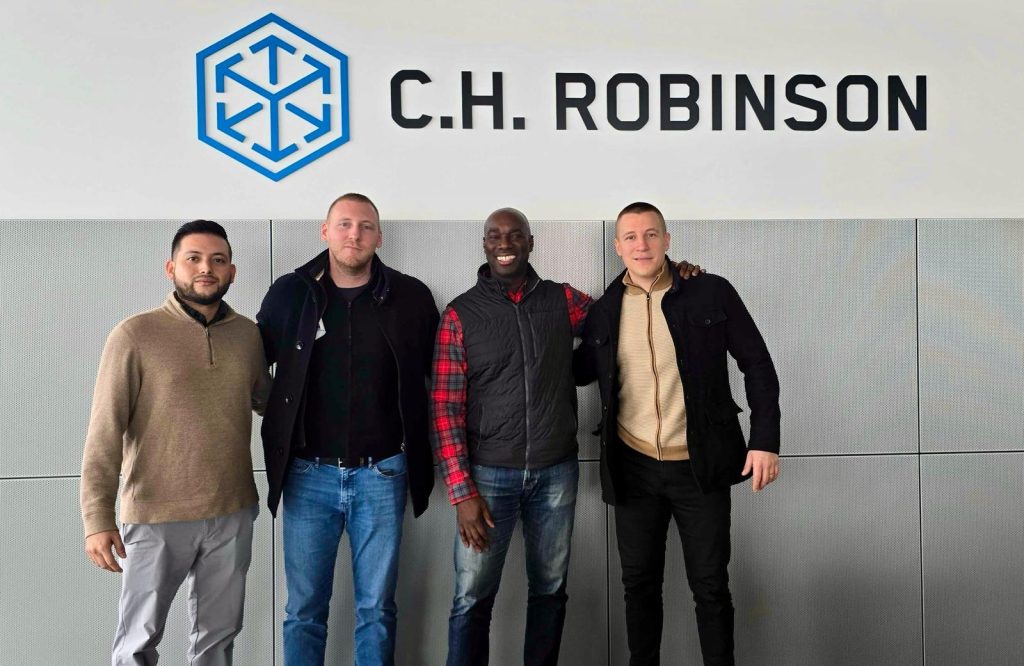
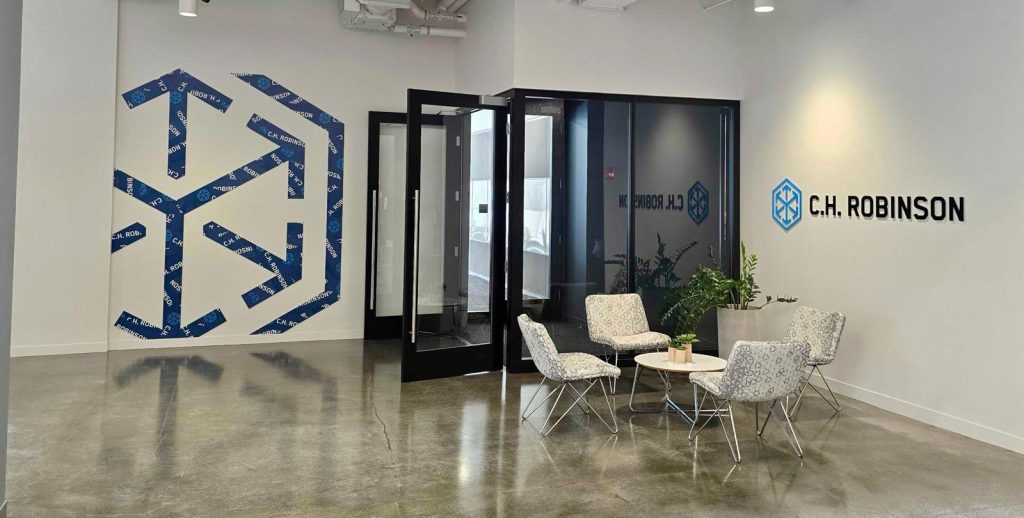
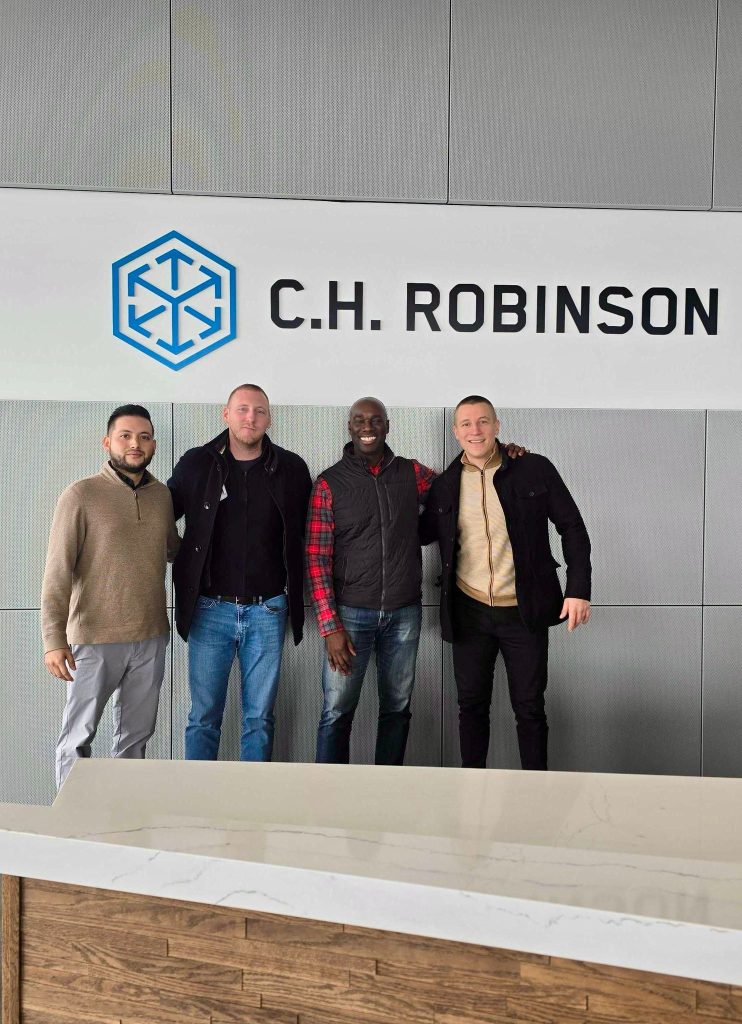
AAM NETWORK INC: Closing the Year with a Visit to Our Long-Term Partner, C.H. Robinson in Chicago

This week, the management team of AAM NETWORK INC had the honor of visiting one of our longest-standing strategic partners , C.H. Robinson, at their Chicago headquarters.
Sharing the same city makes things easier, but sharing the same business mindset makes all the difference.

For years, we’ve built our operations around one simple principle:
Strong partners create strong miles.

C.H. Robinson is one of the world’s largest logistics platforms, moving freight across global supply chains with advanced technology, deep expertise, and a network that spans 39 countries on 5 continents. Their model of blending people, data, and innovation fits perfectly with what we do every day as an OTR carrier. While they connect the world, we connect the miles, reliable DRY VAN capacity, consistent OTR coverage, and a fleet that delivers coast-to-coast.

A Year in Review — and the Road Ahead

Since 2018, AAM NETWORK INC has focused primarily on Over-the-Road trucking, moving dry van loads across all 48 states. We’re closing 2025 with a fleet of 70+ trucks, mostly 2025 and 2026 models, and a team that keeps getting stronger — drivers, dispatch, fleet support, safety, operations.

During our visit, we went through a full recap of all four quarters of 2025:

  • the miles we ran
  • the lanes we supported
  • the wins we delivered
  • and the areas where we push to be even better

We listened to each other, openly and directly , the same way we run our trucks. No shortcuts. No excuses. Just honesty, numbers, and solutions.

We also presented our investments:
new equipment, new training programs, upgraded safety standards, and a young team growing into one of the most capable OTR units in Chicago.

And just as important , we carefully listened to what our partners need from us in 2026 and beyond.
Because good trucking is simple: When you know what your partners expect, you can exceed it.


Learning from the Best in the Industry

There is a lot to learn from people who operate at the global scale of C.H. Robinson.

From technology and analytics, to customer visibility, to carrier-first tools , their approach reflects where logistics is heading, not where it used to be. Many of the ideas we discussed will be implemented in our own operations, from dispatch workflows to fleet planning, equipment cycles, and service guarantees.

This visit wasn’t just a meeting , it was a checkpoint.
A moment to look at who we were in 2018, who we are today, and who we want to become by the end of 2026.

And we already know the answer:
Stronger. Faster. More reliable.


Thank You to Our Hosts , and to Our Daily Partners

To the C.H. Robinson team … thank you for the hospitality, the conversation, the transparency, and the trust.
To everyone who collaborates with the AAM team daily, dispatchers, account managers, carrier reps, operations people , thank you for the partnership and the miles we’ve built together.

As we say in trucking:
Just keep watching us. We’re only getting better.

EVERY MILE WITH A SMILE!

READ MORE
AAM BLOG
November 9, 2025 By admin

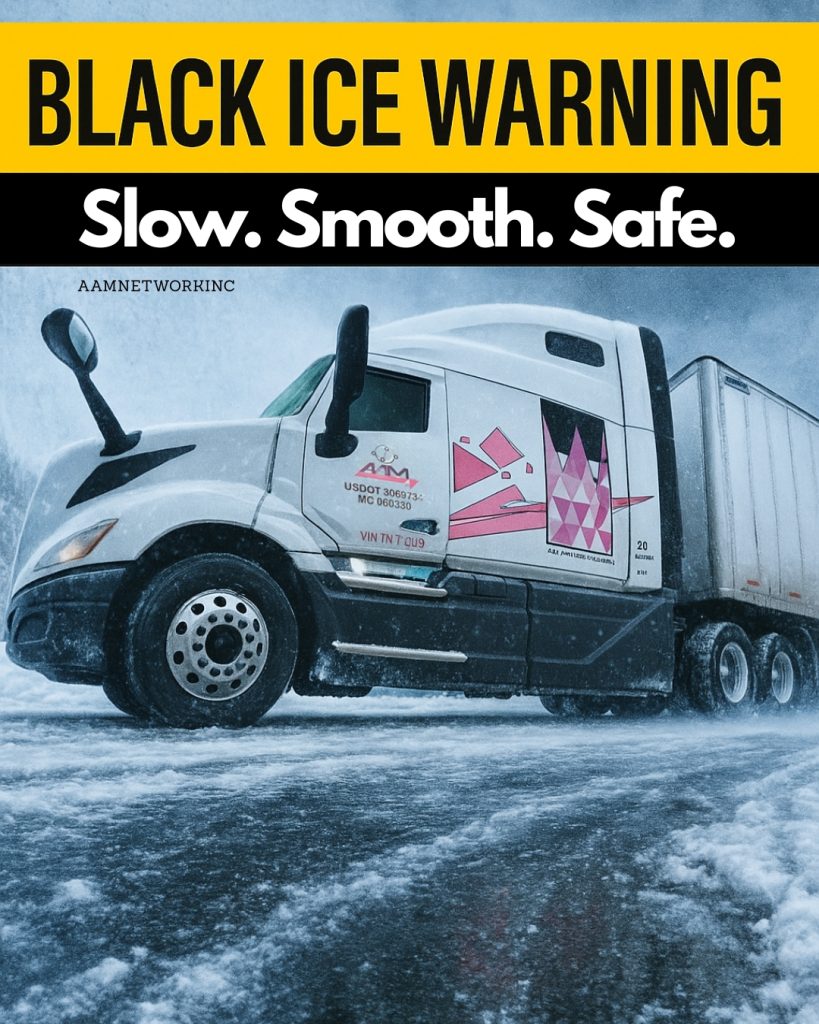
Black Ice: The Silent Winter Hazard Every Professional Driver Must Outsmart

AAM NETWORK INC – Winter Safety Guide for OTR Drivers & Fleet Professionals

A truck doesn’t need deep snow or a frozen highway to lose control—sometimes, all it takes is a road that looks wet.
That’s black ice: thin, invisible, and responsible for thousands of winter crashes every year. For transport companies and OTR drivers, black ice isn’t “bad luck.” It’s a predictable winter hazard that demands preparation, awareness, and professional discipline behind the wheel.

At AAM NETWORK INC, safety isn’t a slogan—it’s part of the job. Our trucks run 48 states all year long, and winter operations require a different level of respect for the road. This guide summarizes real, on-road strategies used by experienced truckers to identify black ice early, avoid common mistakes, and recover safely if the truck begins to slide.


✅ What Makes Black Ice So Dangerous?

Black ice forms when moisture on the road freezes into a clear sheet.
It blends perfectly with asphalt.
It gives zero visual warning.
It removes traction instantly on an 80,000 lb vehicle.

One small skid can turn a controlled ride into a jackknife or chain-reaction pile-up. It has happened on highways from Chicago to Pennsylvania to Wyoming—every winter, the same pattern repeats itself: normal-looking pavement, sudden loss of traction, and no time to react.

Black ice most often develops:
✔ Early mornings or evenings
✔ When the temperature is 33°F and dropping
✔ After rain, melting snow, or freezing fog
✔ Near bodies of water, rivers, and open fields
✔ On bridges, overpasses, and shaded road sections


✅ Why Trucks Are More Vulnerable

Cars slide on black ice—semis accelerate on black ice.

  • 80,000 lbs of mass creates unstoppable momentum
  • Stopping distance becomes meaningless
  • If one axle locks, the trailer can push the tractor sideways
  • Engine brake, cruise control, or a sudden corrective turn can cause a spin

A loaded trailer gives stability in normal conditions.
On black ice, that weight becomes a liability.

One example: in January 2022, a black ice incident in South Korea involved 40+ vehicles. Several fatalities. Zero warning. The same conditions exist here every winter.


✅ Professional Rule #1: Detect Black Ice BEFORE You Hit It

A skilled driver reads the road like an instrument panel.

Watch for these real-world signs:

  • Road looks wet, but no tire spray from vehicles ahead → you are rolling on ice
  • Surface appears glossy, shiny, or “oily” → treat it as frozen
  • Bridges and overpasses → always colder than normal highway
  • Shaded areas from trees or cliffs → freeze and stay frozen
  • Near water → moisture meets cold air = instant ice

If anything feels different—even a slight “float” in the wheel—assume the pavement is frozen.


✅ Professional Rule #2: Speed Wins Nothing on Ice

If you think you might be on black ice:

  • Drop speed way below normal limits
  • Add extreme following distance (10+ seconds)
  • Stay smooth—no sudden steering, braking, or throttle changes
  • Never use cruise control where ice is even a possibility
  • Never touch the engine brake on slick pavement

Friction is already gone—don’t help it disappear completely.


✅ How to Handle a Slide on Black Ice

This part separates professionals from statistics.

✅ If the truck begins to slide:

✔ Take your foot off the accelerator
✔ Do not brake
✔ Do not clutch
✔ Keep wheels pointed where you want the truck to go
✔ Small steering corrections. No panic. No jerks.

Your goal is traction recovery, not “fixing” the skid.
Locked brakes turn a tractor-trailer into a sled.


✅ If the Trailer Starts to Jackknife

The trailer starts overtaking the tractor?
Your instinct will scream “brake harder.”

Do the opposite.

✔ Feet off all pedals
✔ Steer gently into the skid
✔ If space allows, a small, smooth power application may pull the tractor straight (advanced technique—only if you have room)

The calmer the driver, the faster the recovery.


✅ Pre-Trip: Winter Edition

A regular pre-trip is not enough in freezing weather. Winter demands a different checklist.

Tires

  • Pressure drops 1–2 PSI for every 10°F temperature drop
  • Underinflated tires = weak contact patch = no grip
  • Winter-rated tires are not optional in real icy conditions

Brakes

  • Check for uneven wear
  • Inspect air hoses and chambers
  • Even a “small” leak becomes a big problem in sub-zero air

Visibility

  • Clean headlights and fog lights
  • Clear brake lights and turn signals
  • Make sure reflective tape is visible for night driving and blowing snow

In winter, other drivers must see you just as clearly as you see the road.


✅ After a Skid: The Part Most Drivers Forget

You saved the truck. Good.
Now stop driving.

Adrenaline makes people overconfident—and that’s when the second accident happens.

✔ Pull over at a safe location
✔ Hazard lights on
✔ Check tires, rims, brakes, and load
✔ Take 5–10 minutes to calm down before rolling again

A professional finishes the job safely—not quickly.


✅ Winter Threats Beyond Black Ice

Winter offers an entire menu of problems:

  • Freezing rain
  • Hardpack snow
  • Slush hydroplaning
  • Whiteouts
  • Frost heaves
  • Sudden temperature drops
  • Potholes hidden under snow
  • Wildlife crossing in rural areas

One bad decision in winter can undo an entire career of good ones.


✅ Be Ready: Winter Driving Checklist

Every professional should carry:

✔ Scraper & brush
✔ Warm gear (blankets, gloves, boots)
✔ Flashlight + batteries
✔ Food & water
✔ First aid kit
✔ Phone power bank
✔ Chains (where required)
✔ Sand or cat litter for traction

Winter is not the time to “hope for the best.”


✅ AAM NETWORK INC Safety Philosophy

Slow is professional. Smooth is professional.
Finishing the trip safely is the only goal.

Our drivers operate 24/7 across the U.S. We run in mountains, snow belts, lake-effect corridors, and northern plains where temperatures drop fast and conditions change without warning. Black ice isn’t a surprise—it is predictable.
And predictable hazards can be managed.

Black ice doesn’t give second chances.
It looks harmless, attacks without warning, and punishes even small mistakes. Every winter mile should be driven with respect, patience, and professional discipline.

To every driver out there running loads through winter weather—we see you, we appreciate you, and we want you getting home safe.

Every Mile with a Smile.
That’s AAM NETWORK INC.

READ MORE
AAM BLOG
October 26, 2025 By admin

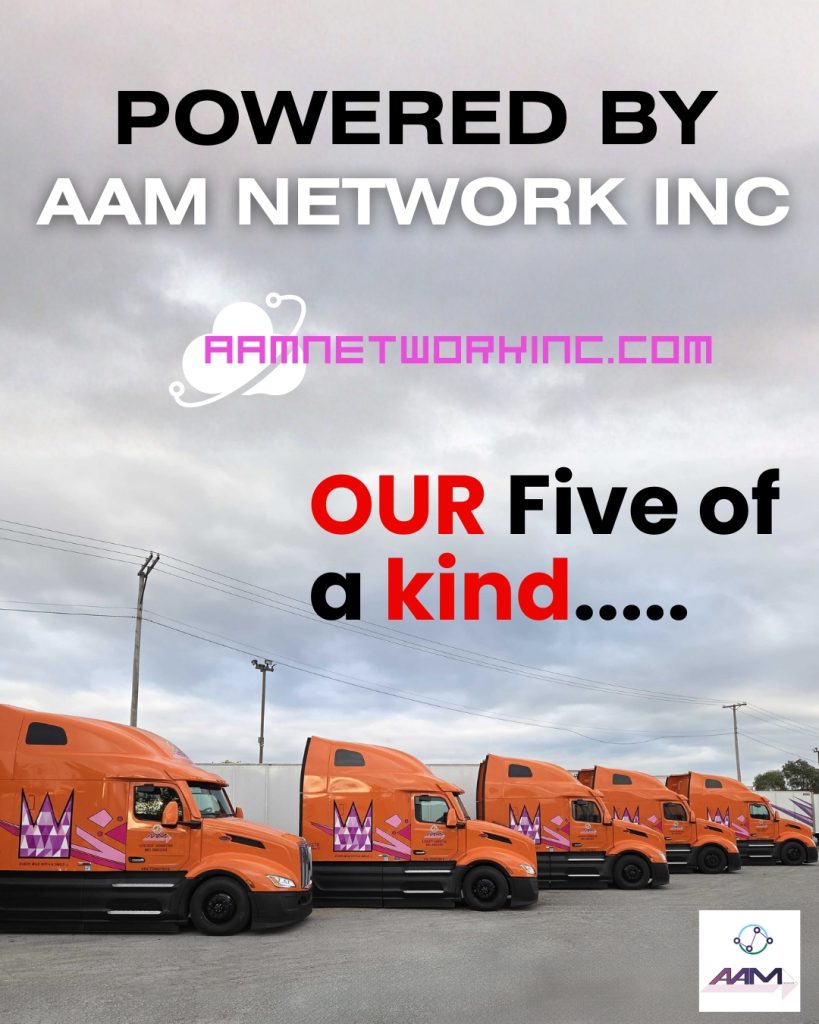
Five New Peterbilts Join the Fleet 🚛🎃

aam network inc
aam network inc

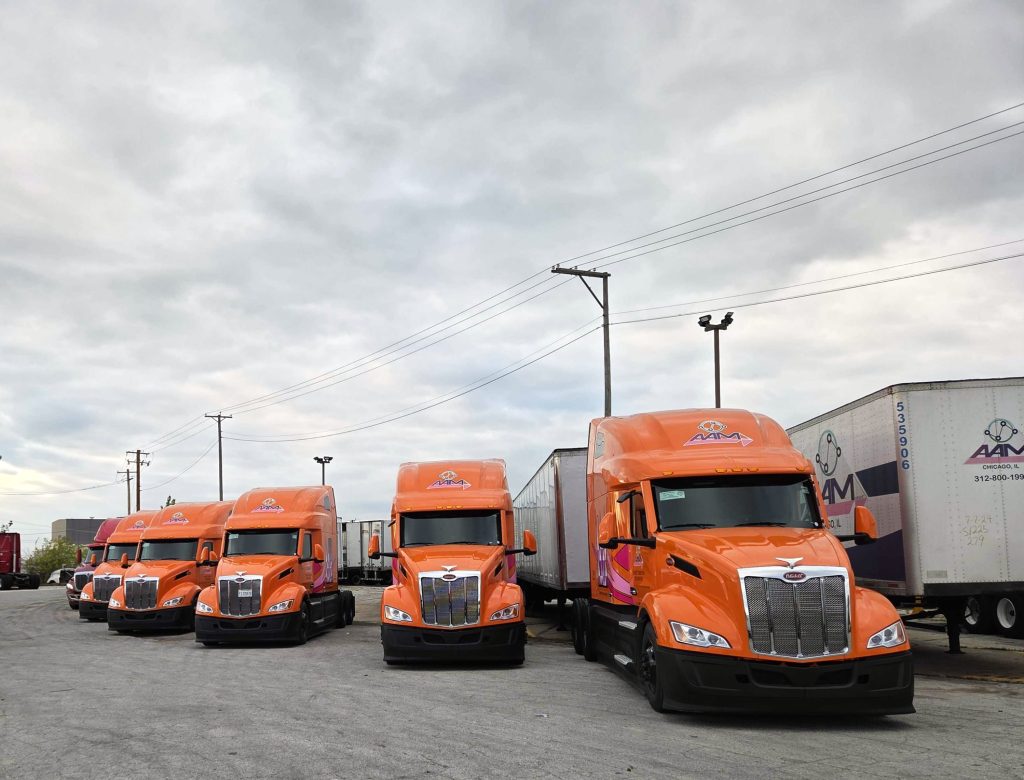
At AAM Network Inc, every new truck delivery is more than just a number – it’s a chapter in our story. This October, our team expanded the fleet with five brand-new Peterbilt 579 EPIQ units, delivered straight from the factory in Denton, TX. Without hesitation, our experts once again chose the Peterbilt 579 EPIQ, a model that has proven its reliability and efficiency time and time again.

Earlier this year, we had the privilege of visiting the Peterbilt Motors Company factory as special guests, where we saw firsthand the impressive assembly process and even the very first Peterbilt ever built. That experience left a lasting mark, and now, thanks to the support of our business partner and JX Truck Center representative, Tyler Kube, it has translated into this exciting delivery.

A special thanks also goes once more to Brian Louis, whose guidance during our factory visit made that milestone possible. Today, his support echoes again as these five orange giants join our fleet.

The Pumpkin Patch on Wheels 🎃

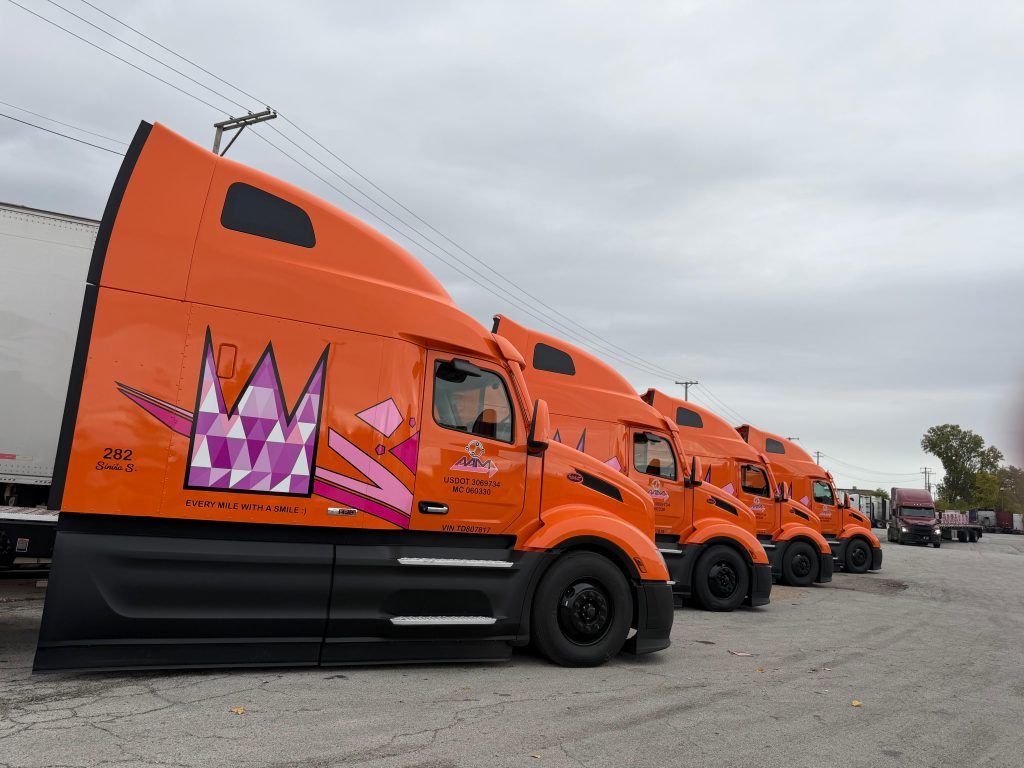
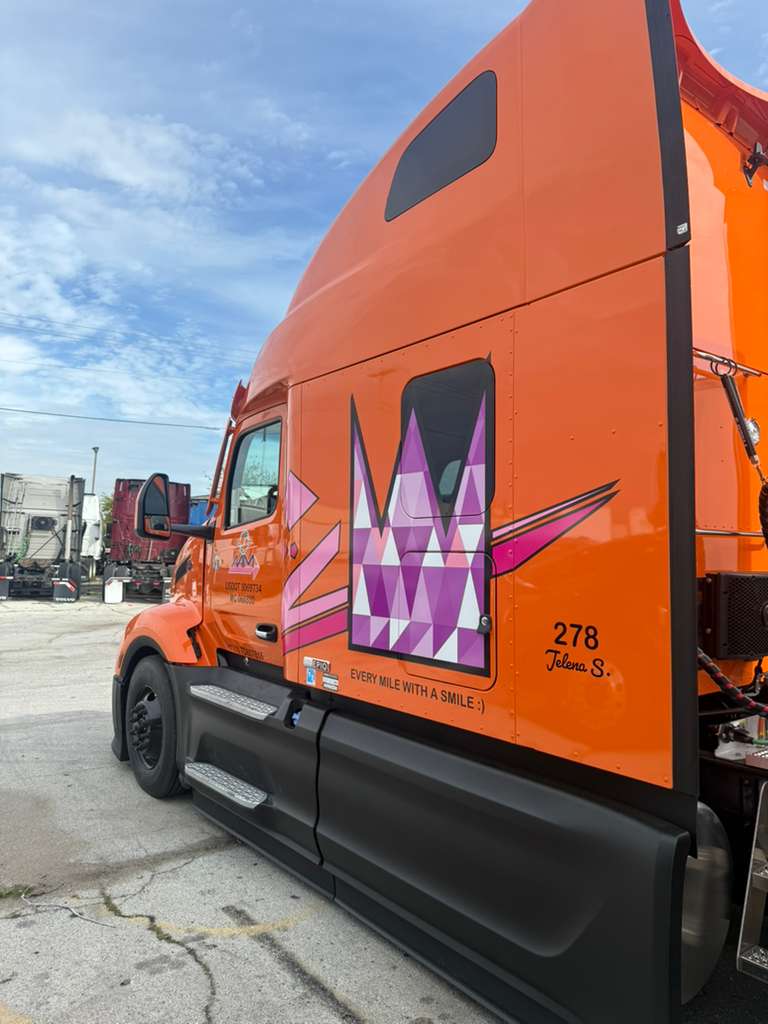
These new trucks arrived in a striking shade of orange – perfectly timed for October. Parked side by side, they resemble a pumpkin patch on wheels, adding a playful Halloween touch to the serious business of trucking. It’s proof that while the road demands dedication and focus, there’s always room for a little fun.

Five of a Kind – Our New Road Masters

What makes these trucks unique is not just their look but also their names. In keeping with our tradition, every new vehicle receives a name – a tribute to individuals who have contributed to AAM Network Inc’s growth and success.

This time, the five new trucks proudly carry the names of:

  • Jelena S.
  • Siniša S.
  • Lazar K.
  • Darko J.
  • Boban M.
aam network inc

Some are dear colleagues from the office, others are trusted drivers on the road – all of them are part of the AAM story. Together, these trucks stand as our “Five of a Kind” – a symbol of growth, loyalty, and the road ahead.

And this time, you can see them before and after our design team added our signature crown and AAM colors to this bright field of “pumpkins.”


🚛 New Trucks. New Opportunities. 🚛

The delivery of these Peterbilts also marks another important milestone:
AAM Network Inc is expanding the fleet with brand-new 2026 Peterbilt & Volvo trucks.

aamnetworkinc

That means one thing: we’re opening the doors for SOLO COMPANY DRIVERS ready to earn big!

Driver Pay & Benefits:

💵 Pay: $0.65 CPM
📈 Average weekly earnings: $3,000–$4,500+
🚚 Miles per week: 3,000+
💳 Weekly pay – always on time

🔥 Bonuses & Benefits include:

  • Safety Bonus – up to $10,000
  • Referral Bonus – up to $6,000
  • Paid detention, layover, extra stop & breakdown pay
  • Hotel/taxi covered if the truck is down
  • Cargo insurance included
  • Steady freight – NO TOUCH
  • Fuel program (Flying J & Pilot)
  • 24/7 dispatch support + flexible home time
  • Dry Van trailers (2022–2026) ready to roll!

📌 Requirements:
• CDL Class A
• Minimum 2 years OTR experience
• Solo drivers only (no local, no regional)

At AAM, we keep you moving with excellent equipment, strong rates, and a team that’s always got your back.

👉 Apply today and start your next chapter with us: aamnetworkinc.com
☎️ Call Ian or Peter at 312-999-9753

READ MORE
  • 1
  • 2
  • 3
  • …
  • 6
logotype

Address: 27 Division St, New York, NY 10002, USA

Website: transmax.com

Email: transmax@mail.com

Phone: +8 (123) 152 25 45

Our Services
Just-In-Time delivery Time based service levels Warehousing Global stock transparency Transport consolidation

2023 © Copyrights StartUp Solutions

  • Terms and Conditions
  • Privacy Policy